Tooth Extraction vs. Dental Implant Pain 2026 - Which Hurts More? Complete Guide
Honest comparison of tooth extraction pain versus dental implant pain and recovery. Learn what hurts more, how long pain lasts, and why implants are better long-term.
Introduction
Patients often ask whether tooth extraction procedures or dental implant placement surgery is more difficult or painful. The answer might surprise you. While both procedures are surgical, they differ significantly in pain intensity, recovery duration, and long-term complications. Understanding these differences helps you make informed decisions about tooth replacement options and whether extraction or implant is worse for your specific situation.
Dental Implant Pain vs. Tooth Extraction Pain: Comparing Acute Pain Levels
TLDR – Dental Implant vs. Tooth Extraction Pain Breakdown:
Tooth extraction procedure pain: Sharp, intense pain during extraction (usually 15–30 minutes of discomfort)
Dental implant placement pain: Minimal pain; primarily pressure and vibration sensations during implant surgery
Extraction recovery pain: 3–7 days of significant soreness (peaks days 2–3 after extraction)
Implant recovery pain: 7–10 days of mild to moderate soreness (manageable with over-the-counter medication)
Extraction complications pain: Dry socket (extreme pain), nerve damage, excessive bleeding
Implant complications pain: Rare; infection or failure is manageable if caught early
Overall dental implant vs. extraction verdict: Tooth extraction typically causes more acute pain; implant placement is gentler
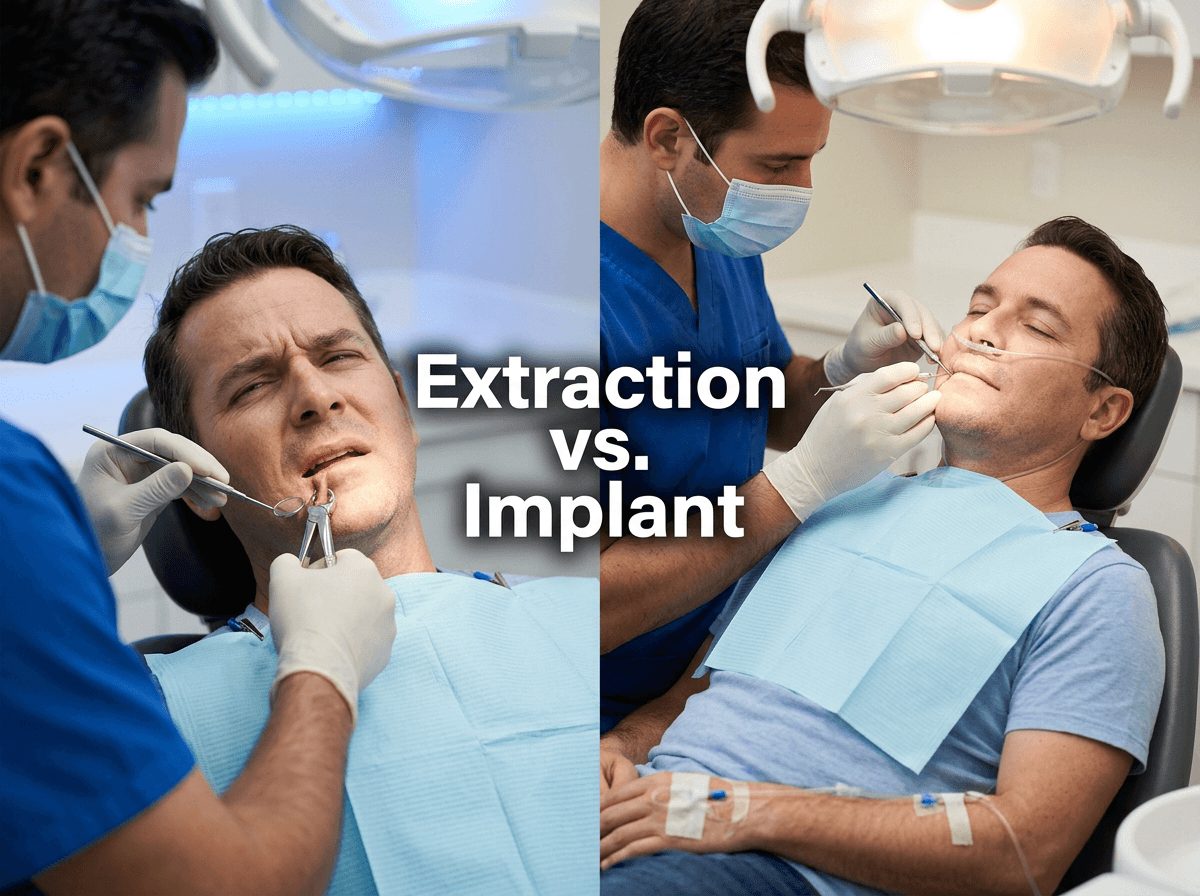
During tooth extraction procedures, the dentist must rupture the periodontal ligament (the tissue anchoring the tooth to bone), wiggle and rock the tooth to loosen it, then pull it forcefully from the socket. This creates significant mechanical trauma. Many patients describe extraction pain as sharp and intense, even with local anesthesia blocking sensation—the pressure and sound of the extraction procedure can feel distressing.
In contrast, dental implant placement surgery involves creating a precise surgical site and screwing the implant into bone. Because bone lacks the dense nerve endings of the periodontal ligament, most patients report feeling pressure and vibration but no sharp implant pain. The surgical time is longer (30–60 minutes per implant vs. 15–30 minutes for extraction), but the acute pain is substantially less than extraction.
Post-operative pain comparison: Tooth extraction typically causes more severe soreness for the first 3–7 days. Patients often experience throbbing extraction pain, difficulty eating, and sleep disruption. Implant recovery, while longer overall (7–10 days for initial healing), involves milder discomfort that most describe as "achy" rather than "painful." Over-the-counter ibuprofen usually suffices for implant pain; extractions sometimes require prescription opioids due to extraction pain intensity.
Extraction Recovery Timeline vs. Dental Implant Recovery: Returning to Normal After Each
Another critical difference between tooth extraction and dental implant procedures is the recovery trajectory. After tooth extraction surgery, the socket heals within 7–10 days for soft tissue closure, but complete bone healing requires 3–6 months. During the first week after extraction, patients must avoid strenuous activity, hot foods, smoking, and rinsing—which can dislodge the blood clot and cause dry socket after extraction, a painful complication.
Most extraction patients return to light work by day 5 and normal activities by day 10, though eating solid foods takes 2–3 weeks after extraction. However, the psychological impact can be significant: you're left with an empty socket from extraction that must eventually be filled with dentures after extraction, bridges after extraction, or implants after extraction—requiring additional treatment and expense.
Dental implant placement recovery is also 7–10 days for initial healing, but the subsequent timeline differs significantly. You cannot immediately receive a permanent implant crown; the dental implant must undergo osseointegration (3–6 months) before the final implant restoration is placed. However, same-day dental implants or temporary provisional implant crowns allow you to maintain your appearance during implant healing. By month 6–12, you have a complete, permanent implant tooth replacement that restores your smile and function permanently.

Long-Term Consequences: Tooth Extraction Bone Loss vs. Dental Implant Bone Preservation
The most significant difference between tooth extraction and implant placement emerges over time. Tooth extraction causes significant bone loss. Within the first year after extraction, the jawbone loses 25% of its volume; by year five after extraction, bone loss reaches 50%. This extraction bone loss creates a "sunken" facial appearance, collapsed bite, and difficulty wearing dentures after tooth loss, which require periodic adjustment as bone continues shrinking after extraction.
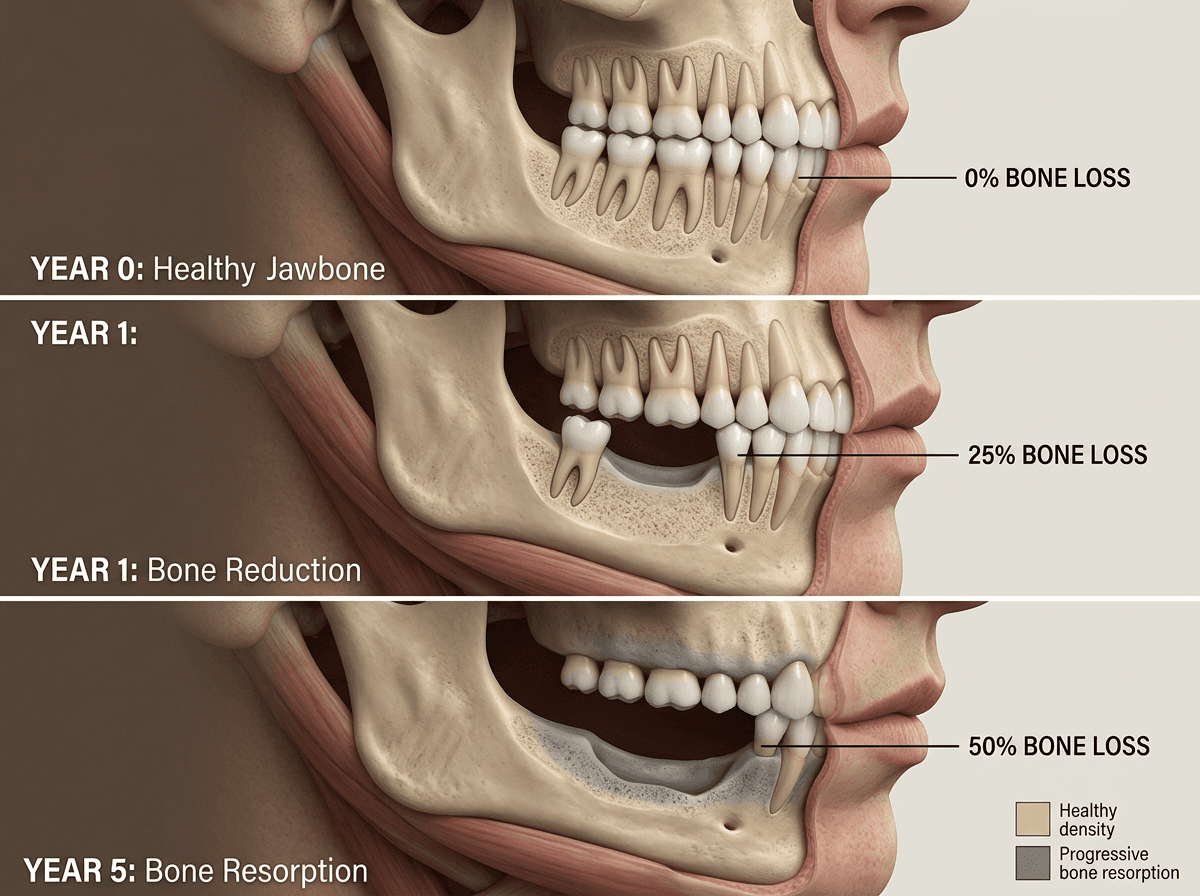
Missing teeth from extraction also cause adjacent teeth to shift into the gap, causing bite problems, grinding wear on remaining teeth, and potential root canal complications after extraction. Tooth extraction is also permanent—once the tooth is extracted, it cannot be recovered. If you later regret the extraction or decide you want better tooth replacement after extraction, your options (implants after extraction, bridges after extraction) are now more complicated and expensive due to bone loss from extraction.
In contrast, dental implants preserve jawbone through osseointegration. The titanium implant acts as an artificial root stimulating bone maintenance, preventing the collapse that occurs after tooth extraction. Over 25+ years, dental implants maintain your facial structure, bite alignment, and remaining teeth health—something extraction cannot provide. If a dental implant fails (rare, <3%), it can be replaced. Dental implants are essentially a permanent solution that improves with age compared to the deterioration tooth extraction causes.

Special Situations: When Tooth Extraction Must Precede Implant Placement
Despite implants being superior long-term to tooth extraction, extraction is sometimes necessary beforehand. If you have a severely infected, cracked, or decayed tooth, extraction must precede implant placement. Emergency tooth extraction may be urgent if the infection threatens your health. Additionally, patients with extensive gum disease requiring extraction must undergo periodontal treatment before extraction or tooth extraction to eliminate infection before implant placement can succeed.
Patients with severe bone loss from previous extraction may need bone grafting for implants or sinus lift procedures for implants before implants are feasible—making the implant process more complex after extraction. This is why prompt extraction followed by timely implant placement (within 6–12 months of extraction) is ideal.
The Verdict: Plan Ahead to Minimize Extraction Pain and Complications
If you must choose between tooth extraction and implant placement, implant placement is the gentler, superior long-term option. The immediate discomfort from implant surgery is less acute than extraction pain, recovery is more straightforward than extraction recovery, and long-term outcomes dramatically favor implants over extraction. However, the best strategy is preventing the need for extraction entirely through preventive care, regular cleanings, and treating cavities and gum disease early—avoiding extraction altogether.
If you already have a damaged or failing tooth, don't delay extraction treatment. Prompt extraction followed by bone grafting if needed for implants (if needed after extraction) and timely implant placement within 6–12 months after extraction gives you the best outcome. Contact Gardens Implant & Cosmetic Dentistry to discuss your extraction and implant options. Schedule a consultation with our specialists today. Call (561) 691-1629.
Blog


