What Is TMJ Disorder? Causes, Symptoms, and Treatment Options
TMJ disorder affects 10+ million Americans. Learn causes, symptoms, and conservative treatment options from Gardens Implant & Cosmetic Dentistry.

What Is TMJ Disorder, in Plain Terms?
TMJ disorder (clinically called temporomandibular disorder, or TMD) is a group of more than 30 conditions that cause pain and dysfunction in the jaw joint and the muscles that move it. The temporomandibular joint sits just in front of each ear and acts as a sliding hinge between the lower jaw and the skull. According to the National Institute of Dental and Craniofacial Research, between 5 and 12 percent of U.S. adults are affected, which represents roughly 10 million Americans. For most patients, symptoms are manageable with conservative care, and many will see meaningful relief without ever needing surgery. If your jaw pain is persistent, our team can evaluate it during a comprehensive consultation.
What This Guide Covers
TLDR, TMJ Disorder at a Glance:
Prevalence: 5 to 12 percent of U.S. adults, roughly 10 million people.
Most affected: Adults aged 20 to 40, with women diagnosed at about twice the rate of men.
Top symptoms: Jaw pain, clicking or popping, limited opening, headaches, and ear discomfort.
Common causes: Bruxism (teeth grinding), bite misalignment, stress, jaw trauma, and arthritis.
First-line treatment: Conservative care including soft diet, jaw rest, heat or cold, physical therapy, and custom oral appliances.
When surgery is considered: Only after conservative measures fail or with structural joint damage.
Outlook: Most patients improve within weeks of consistent self-care plus a dental evaluation.
If you have ever woken with a sore jaw, struggled to bite into an apple, or felt a click every time you yawn, you are not imagining it. TMJ disorder is the third most common chronic pain condition after back pain and headaches, yet it is often misdiagnosed because the symptoms overlap with ear infections, migraines, and sinus pressure. The good news is that the jaw joint responds well to early, targeted care, and the conservative tools your dentist uses are well-supported by clinical research.
This guide walks through what TMJ disorder actually is, how to recognize the signs, what triggers it, and which treatment options have the strongest evidence behind them. We will cover home self-care, in-office options like custom night guards and sedation dentistry for related procedures, and the small number of cases where surgical referral is appropriate. Everything here applies to patients in Palm Beach Gardens, Jupiter, North Palm Beach, and the surrounding South Florida communities we serve.

Causes and Symptoms of TMJ Disorder
TMJ disorder is rarely caused by a single factor. A 2025 global systematic review and meta-analysis published in the Journal of Oral and Facial Pain and Headache confirmed that TMD typically results from a combination of mechanical, behavioral, and psychosocial inputs. The most common drivers include nighttime teeth grinding (bruxism), a misaligned bite, direct trauma to the jaw or face, displacement of the cartilage disc inside the joint, and degenerative conditions such as osteoarthritis. Stress and anxiety play a much larger role than most patients realize, since both elevate jaw muscle tension and increase the likelihood of clenching during sleep. A 2023 PMC study of dental students found a direct relationship between anxiety scores and the prevalence of TMD symptoms, reinforcing how tightly the joint is tied to overall stress load.
Symptoms You Should Not Ignore
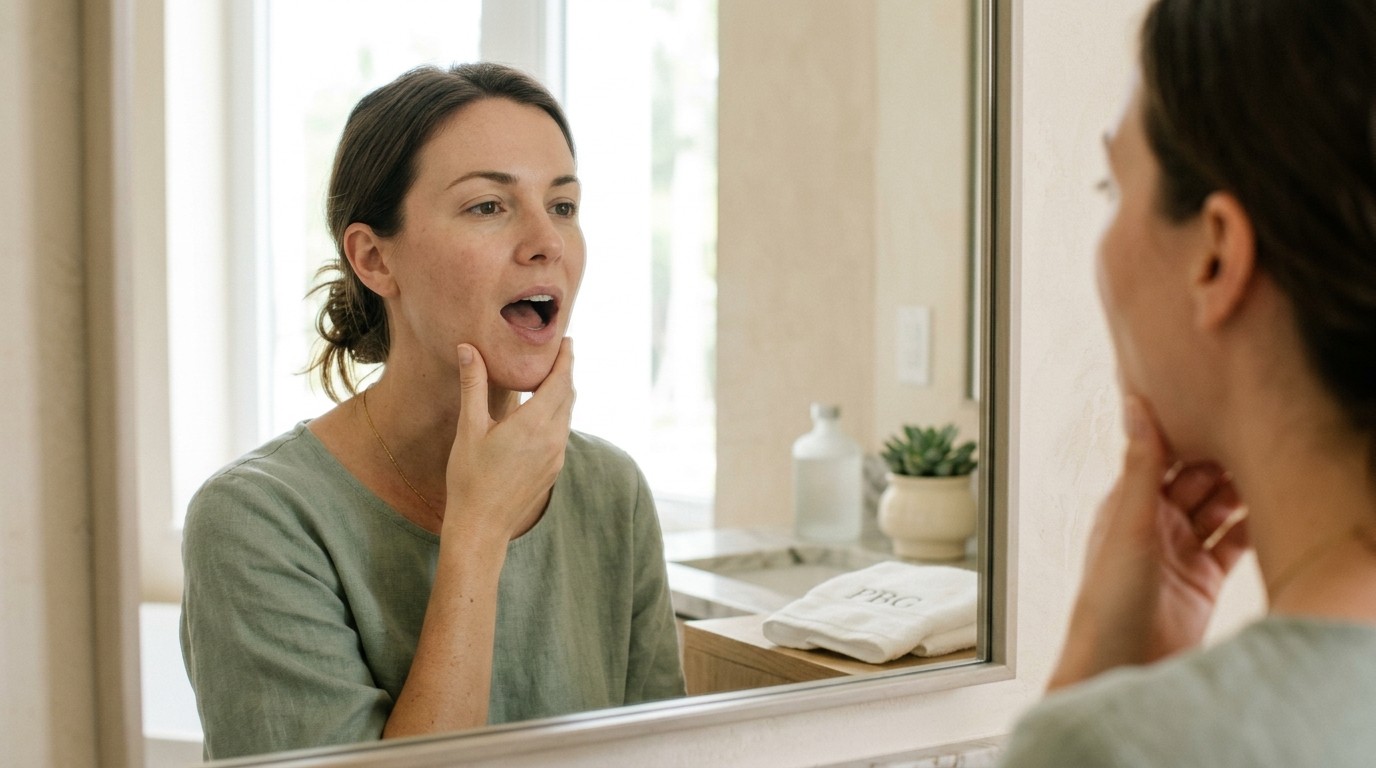
TMJ symptoms can be quiet at first and then escalate over weeks or months. The hallmark signs include a dull or sharp ache around the jaw joint, clicking or popping when you open and close, a feeling that the jaw is locking or catching, tension headaches that begin near the temples, and referred pain into the ear or neck. Many patients also report tooth pain that has no dental cause, which can mimic the symptoms of a severe toothache and lead to unnecessary procedures if the joint is not evaluated first. If you notice limited opening, persistent morning soreness, or pain that worsens when you chew, those are signals to be evaluated rather than wait it out.
How TMJ Disorder Is Treated
Modern clinical guidance is clear: TMD should be managed with conservative, reversible treatments first. A 2025 executive summary of the Clinical Practice Guideline on Conservative vs Invasive Interventions for TMDs recommends behavioral education, jaw rest, physical therapy, anti-inflammatory medication, and custom occlusal appliances as the foundation of care. A separate 2023 review in the Journal of Clinical Medicine confirmed that the majority of patients experience meaningful symptom improvement within a few weeks of consistent self-care combined with in-office support. Most patients never need invasive intervention. The treatment plan that works is the one matched to your specific symptom pattern, which is why a thorough exam and bite analysis matter more than any single device or product.
From Home Care to Custom Appliances
Treatment at our practice typically follows a stepwise model. At home, patients are coached on a soft food diet for a few weeks, gentle jaw stretching, alternating warm and cold compresses, and stress management techniques to reduce clenching. In the office, a custom-fitted night guard or stabilization splint is often the most impactful step, because it protects the teeth from grinding forces and gives the jaw muscles a stable resting position. Physical therapy referrals, short courses of anti-inflammatory medication, and trigger-point work round out conservative care. For patients with related dental issues, we may also coordinate crown or bridge work to correct a bite that is contributing to the problem, or extract a non-restorable tooth that is forcing the jaw into a compensating pattern. If a patient is highly anxious about treatment, sedation dentistry can make even longer restorative visits feel manageable, which is especially helpful for patients who avoid dental care because of fear, a topic we cover in depth in our dental anxiety management guide.

When You Should See a Dentist About TMJ Pain
Occasional jaw soreness after a long workday or a hard chewing session usually settles on its own. The pattern that warrants an evaluation is pain that persists for more than a few weeks, locking or catching of the jaw, headaches that begin near the temples, ear fullness with no infection, or any sudden change in how your teeth come together. If you have had a fall, sports injury, or other trauma to the face, an evaluation should not wait. Many of our patients come in expecting bad news and leave with a clear, conservative plan that does not involve surgery. The earlier the joint is assessed, the more conservative the care can stay.
It is also worth knowing that TMJ pain can refer to other places in the head and neck, which is why patients sometimes see an ENT or a primary care doctor first. A dental evaluation is the most direct way to rule the jaw joint in or out, because it pairs a clinical exam with a look at your bite, your wear patterns, and your imaging. If we determine the issue is outside our scope, we coordinate the referral and stay in the loop on your care.
Get a Clear Answer About Your Jaw Pain
Ready to find out what is actually causing your jaw pain? Our team is serving Palm Beach Gardens, Jupiter, and North Palm Beach with comprehensive TMJ evaluations and conservative treatment plans. Schedule a comprehensive consultation with our specialists at Gardens Implant & Cosmetic Dentistry. We will examine your bite, review your symptom history, and walk you through the most reversible, evidence-based options first. Call (561) 691-1629 or book your free consultation online to get started.
Blog


