Sedation Dentistry: Types, Safety, and What to Expect
Sedation dentistry explained: nitrous oxide, oral, and IV sedation, safety data, recovery, and who qualifies. Palm Beach Gardens dental care today.
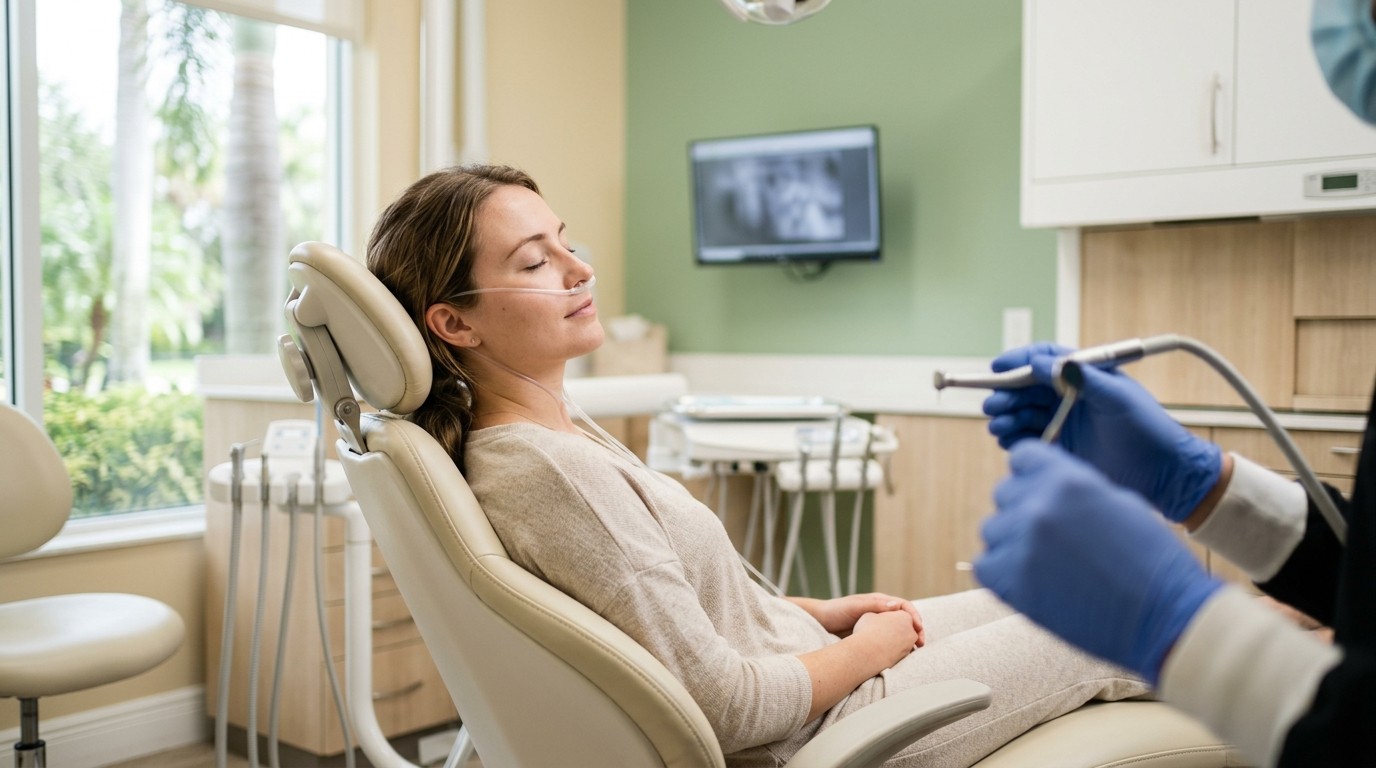
What is sedation dentistry, and is it actually safe?
Sedation dentistry uses medication to help patients stay calm, comfortable, and still during dental procedures, ranging from light relaxation with nitrous oxide to deeper IV sedation for complex surgery. A 2024 systematic review and meta-analysis estimated that 15.3% of adults globally experience dental fear and anxiety, with 3.3% reporting severe phobia, and the American Dental Association notes that roughly 41% of patients admit to delaying care because of fear. When administered by trained clinicians who follow ADA monitoring protocols, modern sedation has an excellent safety profile, with most peer-reviewed reviews reporting under 5% minor adverse events and serious complications considered rare. If you are weighing options, the team at Gardens Implant & Cosmetic Dentistry tailors the level of sedation to your medical history and the procedure.
Sedation dentistry, quickly explained
TLDR – Sedation Dentistry:
Four levels: local anesthesia, nitrous oxide, oral sedation, IV sedation.
Anxiety reach: 15.3% of adults globally have dental fear; up to 41% delay care.
Nitrous oxide: 30 to 60 second onset, 15 to 30 minute recovery, you can drive home.
Oral sedation: a pill taken 30 to 60 minutes pre-visit, 70 to 85% effective for moderate anxiety.
IV sedation: deepest in-office option, full 24 hour recovery, an adult driver required.
Safety record: peer-reviewed data shows under 5% minor adverse events when monitored.
Cost range: nitrous from about $50 to $150 per visit, IV sedation roughly $500 to $1,000 per hour.
Best candidates: dental anxiety, strong gag reflex, long procedures, complex surgery like full-mouth implants.
Sedation is not one drug or one level. It is a spectrum, and the right place on that spectrum depends on three things: your anxiety level, your medical history, and the scope of the procedure. A 20 minute filling and a four hour implant reconstruction call for very different approaches. The American Dental Association formally defines four levels of sedation, from minimal sedation where you remain fully awake and responsive, to deep sedation and general anesthesia where consciousness is significantly reduced. Most dental sedation in a private practice setting sits in the minimal-to-moderate range, which keeps patients relaxed and cooperative while preserving their reflexes.
At Gardens Implant & Cosmetic Dentistry in Palm Beach Gardens, board-certified periodontist Dr. Jesse Lemoine and our restorative lead Dr. Almanzar coordinate sedation in-house for cases that range from extractions to full-arch implant work. The advantage of in-house surgery and sedation is continuity: one team plans the case, one team manages your airway and monitoring, and one team handles your recovery. The sections below walk through each sedation level, who is a strong candidate, what monitoring looks like, recovery expectations, and what you can expect to pay.

The four levels of dental sedation, compared
Local anesthesia is the floor of the sedation conversation, technically not sedation at all, but worth naming. A numbing injection of lidocaine or articaine blocks pain in a defined area while you stay fully alert. It is the workhorse of routine restorative dentistry and is used alongside every other sedation level on this list. Nitrous oxide, or laughing gas, is the lightest true sedation. You inhale a blend of nitrous and oxygen through a small nasal mask, and the calming effect arrives in 30 to 60 seconds. Recent meta-analyses report that nitrous oxide produces under 5% adverse events such as nausea, with rapid onset and full recovery in roughly five to thirty minutes. You stay awake, you can answer questions, and most adults can drive home immediately after the gas is turned off.
Oral conscious sedation uses a prescription pill, most commonly a benzodiazepine like triazolam, taken 30 to 60 minutes before the appointment. You remain conscious but deeply relaxed, drowsy, and often with hazy memory of the procedure. Reviews of oral sedation report 70 to 85% efficacy for moderate dental anxiety, with full recovery typically inside 24 hours and a requirement for an adult driver. IV sedation is the deepest in-office option short of general anesthesia. Medication is delivered through a vein for precise, second-by-second control of depth, which is part of why IV sedation is preferred for long oral surgery visits. A 2024 PMC analysis of intravenous and inhalational conscious sedation in geriatric oral surgery patients found favorable safety and satisfaction outcomes, even in medically complex older adults, which is reassuring for any patient considering implant surgery.
Who is a good candidate, and how safety is actually monitored
Sedation dentistry is appropriate for a much wider group than most patients assume. Strong candidates include people with diagnosed dental anxiety or phobia, patients with a pronounced gag reflex, those undergoing long or multi-quadrant procedures, patients with complex surgical needs like dental implants or full-mouth reconstruction, and patients whose medical history makes long appointments difficult. People with significant cardiopulmonary disease, sleep apnea, or pregnancy may still be candidates, but the sedation plan changes meaningfully. This is where a careful pre-sedation health history matters more than the choice of drug. If you have unmanaged sleep apnea or take central nervous system depressants, your dentist will likely steer you toward lighter sedation or coordinate with your physician.
What in-office monitoring looks like
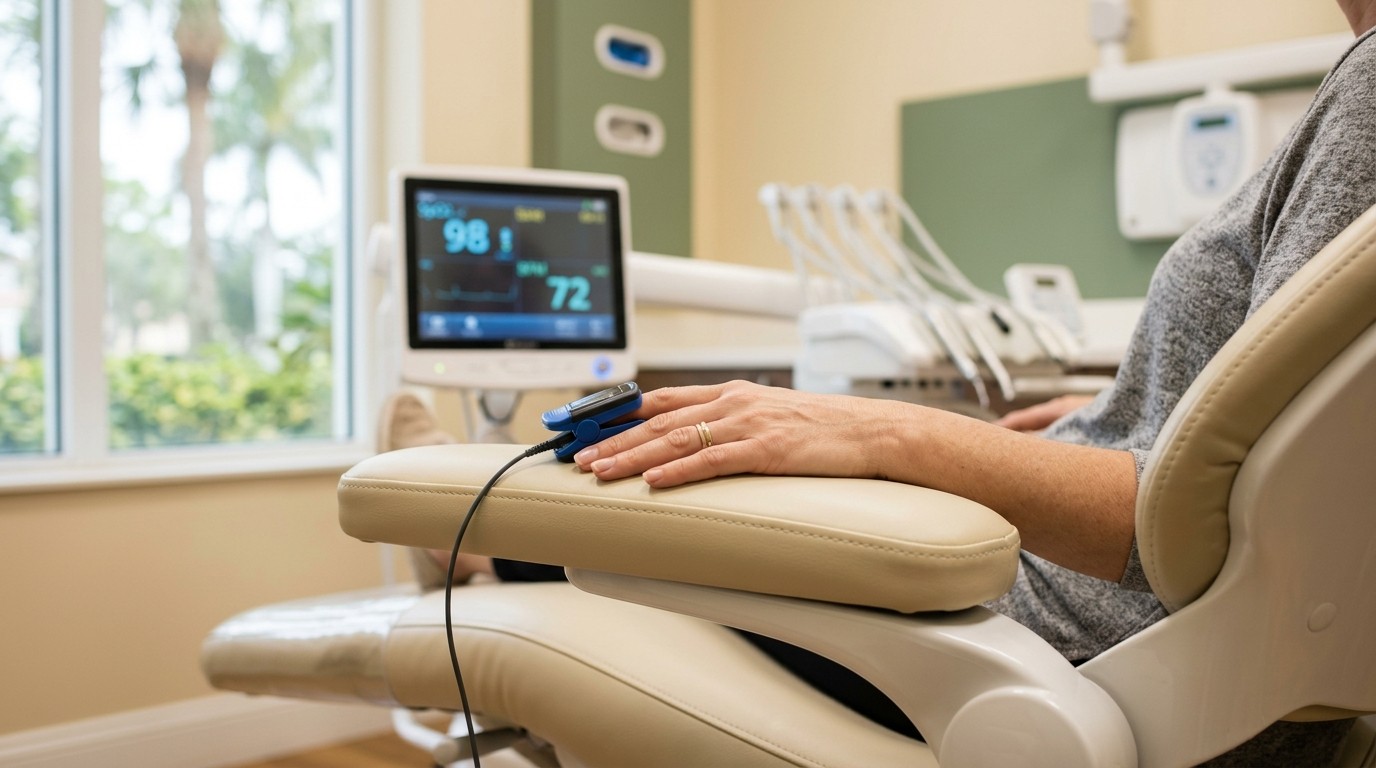
For moderate and IV sedation, ADA guidelines call for continuous pulse oximetry, blood pressure cuffs, capnography for end-tidal CO2 where indicated, and a clinician whose only job during the procedure is monitoring your vitals. Emergency equipment, including reversal agents like flumazenil for benzodiazepines and supplemental oxygen, is on hand and checked before every sedation case. Dr. Jesse Lemoine, our board-certified periodontist, performs in-house surgery with this full monitoring stack in place, which removes the friction of being referred out to a separate surgical center. That continuity matters in real-world cases, because the team that planned your implants is the team watching your vitals. If you are nervous about whether you will be aware during a procedure, our blog on whether you are awake during dental implant surgery walks through the specifics.
Recovery, cost, and how to choose the right level
Recovery scales with the depth of sedation. Nitrous oxide wears off within 15 to 30 minutes, and the gas is fully cleared from your system before you leave the chair, so you can drive yourself home and return to work the same day. Oral sedation and IV sedation are different animals: you should plan for a full 24 hours before driving, operating machinery, or making significant decisions, and you will need an adult escort to drive you home. Drowsiness, mild grogginess, and patchy memory of the appointment are expected and benign for the first several hours. Eating light foods, hydrating, and resting are the standard post-sedation routine. If you had a surgical procedure such as an extraction or implant placement under sedation, surgical aftercare instructions sit on top of sedation recovery, not in place of it.
What you can expect to pay
Sedation pricing varies by region, provider, and case length, but published ranges are consistent. Nitrous oxide typically runs about $50 to $150 per visit. Oral sedation usually ranges from $150 to $500 depending on the medication and visit length. IV sedation, the most monitoring-intensive option, generally falls between $500 and $1,000 per hour, with incremental charges past the first hour. Many dental insurance plans do not cover sedation unless it is medically necessary, though plans increasingly cover it for documented severe anxiety, special needs, or extensive surgery. For complex cases like dental implants, sedation cost is often a small fraction of the total case fee, and patients tend to find that the comfort and reduced session count are worth it. For context on the cases where sedation is most often used, see our notes on the most feared dental procedures and on managing dental anxiety in Palm Beach Gardens.

When to be cautious, and what to ask your dentist
Sedation dentistry is safe for the vast majority of patients, but it is not a one-size decision. Flag conditions that change the plan: untreated sleep apnea, significant heart or lung disease, pregnancy, current use of opioids or benzodiazepines, or a known reaction to sedatives in the past. Ask any sedation dentist three questions before agreeing to a plan. First, what level of sedation are you recommending and why for my specific case? Second, what monitoring will be in place during the procedure, and who is responsible for it? Third, what does recovery look like in the first 24 hours, and what should I watch for? A confident, specific answer to all three is the marker of a practice that does sedation routinely and does it well.
Sedation also pairs naturally with emergency dental care, where pain and anxiety often arrive together. If you are in pain right now and worried about sedation, the calmest path is usually to call the office, describe what you are feeling, and let the clinical team decide the right sedation level before you arrive. Our prior post on emergency dentist sedation covers that scenario in more depth.
Ready to talk about a sedation plan that fits you?
Ready to have a calmer, more comfortable dental visit? Serving Palm Beach Gardens, Jupiter, and North Palm Beach, schedule a comprehensive consultation with our specialists at Gardens Implant & Cosmetic Dentistry. We will review your medical history, walk through nitrous oxide, oral, and IV sedation options, and build a plan around the procedure you actually need. Call (561) 691-1629 or book your free consultation and tell us what is making you nervous. We will take it from there.
Blog


