Dental Implant Downsides & Risks 2026 - Honest Complications Guide
Learn the real downsides of dental implants, including cost, healing time, complications, and maintenance requirements. Honest guide from Palm Beach Gardens specialists.
Introduction
Dental implants are celebrated as the gold standard for tooth replacement—offering unmatched durability, functionality, and aesthetics compared to bridges or dentures. However, like any surgical procedure, implants come with legitimate drawbacks that patients should understand before committing. At Gardens Implant & Cosmetic Dentistry, Dr. Hans Almanzar and Dr. Jesse Lemoine believe in full transparency about both the benefits and limitations of implant therapy.
What Are the Main Disadvantages of Getting Dental Implants?
TLDR – Key Disadvantages:
High upfront cost: $2,500–$3,500 per tooth ($20,000–$80,000+ for full mouth)
Long treatment timeline: 4–12 months from extraction to final restoration
Surgical risks: infection, nerve damage, sinus complications, implant failure (1–3%)
Bone loss requirements: patients with insufficient bone need grafting ($500–$3,000 extra)
Maintenance demands: daily brushing, flossing, professional cleanings every 3–6 months
Irreversible procedure: once placed, implants are permanent commitments
Not suitable for everyone: age restrictions, health conditions, smoking, poor oral hygiene
The most obvious downside to dental implants is the financial barrier. Unlike traditional dentures (starting at $1,500–$3,000) or dental bridges ($1,500–$5,000 per tooth), implant treatment requires significant out-of-pocket expense. A single tooth implant costs $2,500–$3,500, while full mouth implants run $40,000–$80,000+. For many patients, this represents a major financial commitment that requires careful planning.
Beyond cost, the treatment timeline is considerably longer than alternatives. A complete implant case typically requires 4–12 months from initial tooth extraction through final crown placement. This includes extraction and healing (if needed), bone grafting (if bone loss is present), osseointegration (implant fusing to bone over 3–6 months), abutment placement and impression, and custom crown fabrication and delivery.
Patients requiring bone grafting or sinus lift procedures may wait even longer. For someone who has lost teeth and wants immediate replacement, this extended timeline can feel frustrating—though same-day dental implants now offer faster solutions in select cases.

What Are the Surgical Risks and Complications Associated with Dental Implants?
While dental implant success rates exceed 95%, complications can occur. Implant failure (where the implant doesn't fuse to bone and must be removed) happens in 1–3% of cases, usually within the first 6 months. Risk factors include smoking, diabetes, poor oral hygiene, bone loss, and insufficient healing time. Infection at the implant site can develop if bacteria contaminate the surgical wound, requiring antibiotics or implant removal.
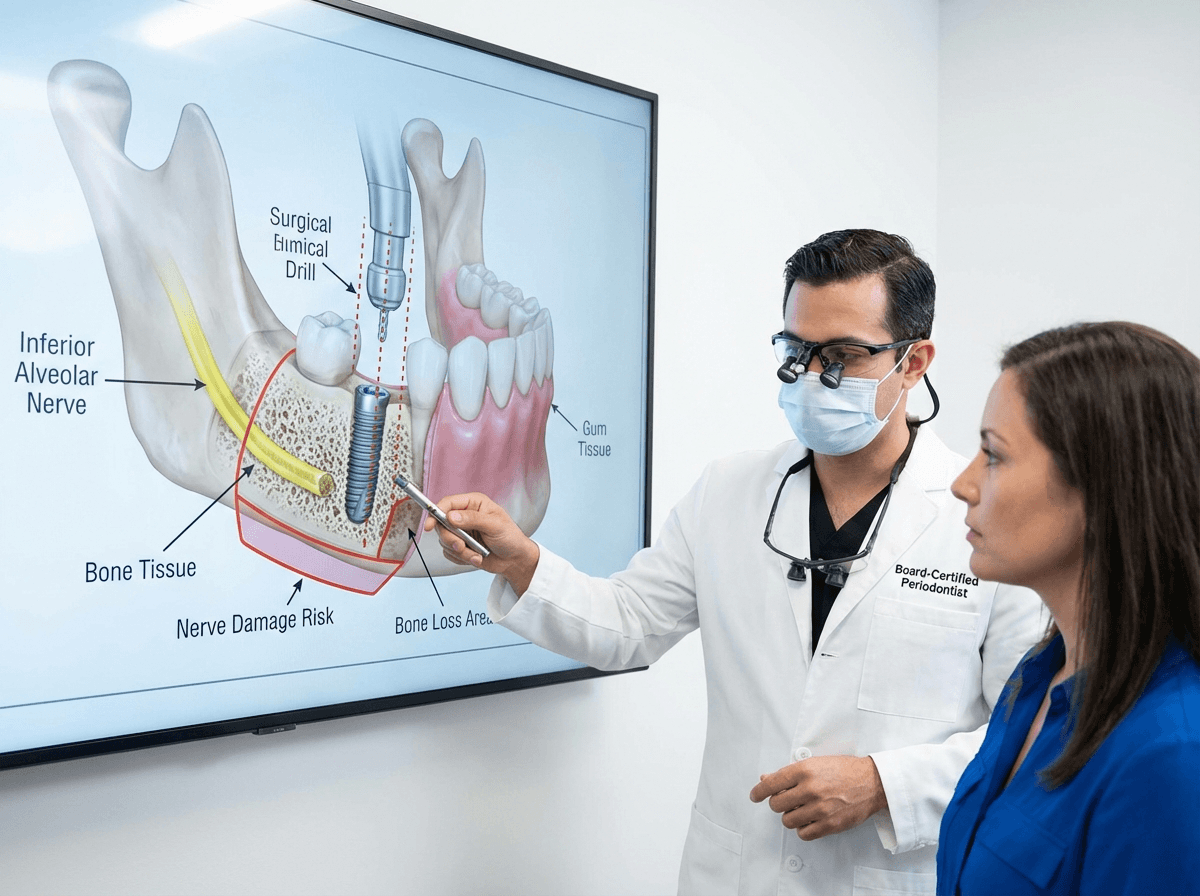
Nerve damage is a rare but serious complication where the surgical drill contacts the inferior alveolar nerve, causing permanent numbness or pain in the lower jaw, lips, or chin. Sinus complications occur when upper jaw implants penetrate the sinus cavity, potentially causing chronic sinusitis or implant failure. Bone loss around the implant (peri-implantitis) happens when gum disease develops at the implant site, eroding supporting bone and threatening implant stability. Understanding these risks is why choosing an experienced specialist like Dr. Hans Almanzar or Dr. Jesse Lemoine is critical for success.
Implants Demand Strict Maintenance and Lifestyle Changes
A major downside many patients don't anticipate is the rigorous maintenance implants require. Unlike natural teeth that have periodontal ligaments helping absorb pressure, implants sit directly in bone. This means daily brushing and flossing around implants is non-negotiable—neglect leads to gum disease and bone loss.
Professional cleanings every 3–6 months are essential (vs. traditional 6-month intervals for natural teeth). Smoking cessation is mandatory, as smoking reduces implant success rates by 50%+. You'll need to avoid hard foods like ice, nuts, and sticky candies (which can fracture the crown). No tobacco or excessive alcohol consumption is allowed, as these impair healing and long-term success.
Patients who develop periodontal disease or poor oral hygiene often experience implant failure years after successful placement. This is why Dr. Hans Almanzar and Dr. Jesse Lemoine emphasize that implant candidates must commit to lifelong care. During your consultation, we thoroughly evaluate whether you're prepared for this level of maintenance before recommending implant therapy.

Is the Downside of Dental Implants Worth It?
Despite these downsides, dental implants remain the best long-term tooth replacement option for most patients. The advantages significantly outweigh the disadvantages for people who have sufficient bone or can undergo grafting, maintain rigorous oral hygiene habits, commit to regular professional cleanings, avoid smoking and excessive alcohol, and have stable systemic health (well-controlled diabetes, heart disease, etc.).
For patients who cannot tolerate implant maintenance or lack sufficient bone, implant-supported bridges or implant-supported dentures offer middle-ground solutions. At Gardens Implant & Cosmetic Dentistry, we help every patient understand the full picture—including downsides—to make informed decisions.
Schedule a consultation with Dr. Hans Almanzar or Dr. Jesse Lemoine to assess whether implants are right for you and discuss alternatives. Call (561) 691-1629 or book your free consultation today.
Blog


