
OUR SERVICES
Implant-Supported Bridges in Palm Beach Gardens, FL
Implant-Supported Bridges: Bridge the Gap with Permanence
If you are missing three or four teeth in a row, you understand the frustration. Chewing becomes difficult, your remaining teeth start to shift, and you may feel self-conscious about the visible gap in your smile.
At Gardens Implant & Cosmetic Dentistry, we offer a robust, permanent solution: the Implant-Supported Bridge.
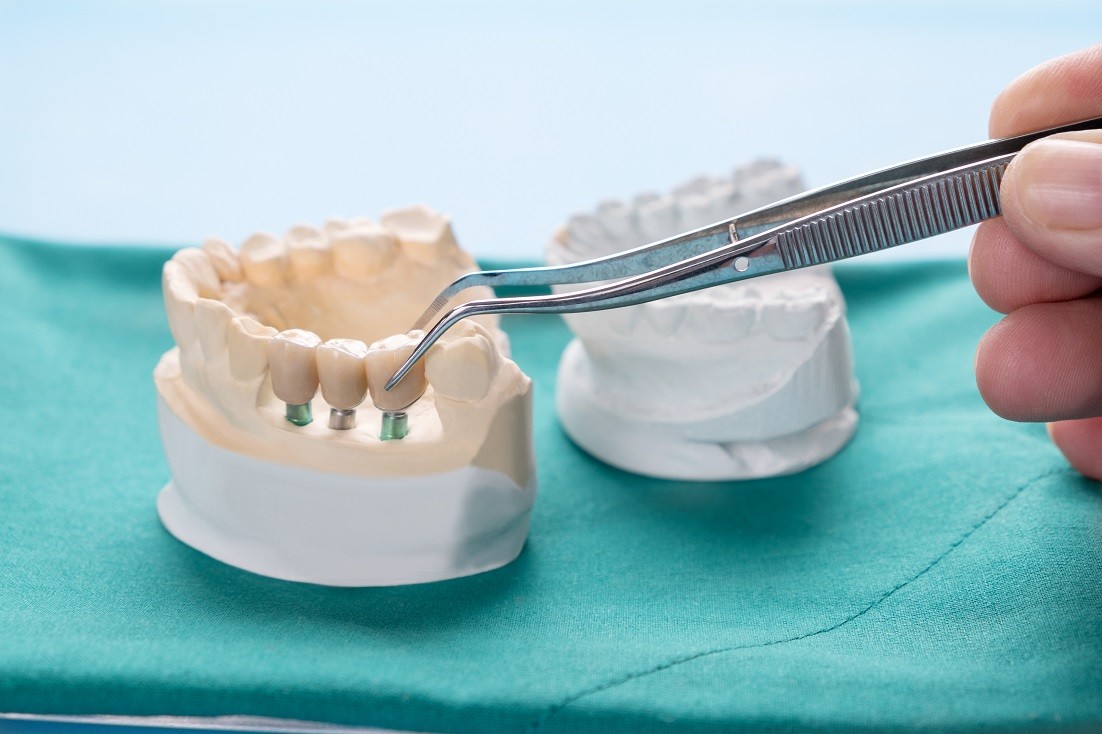
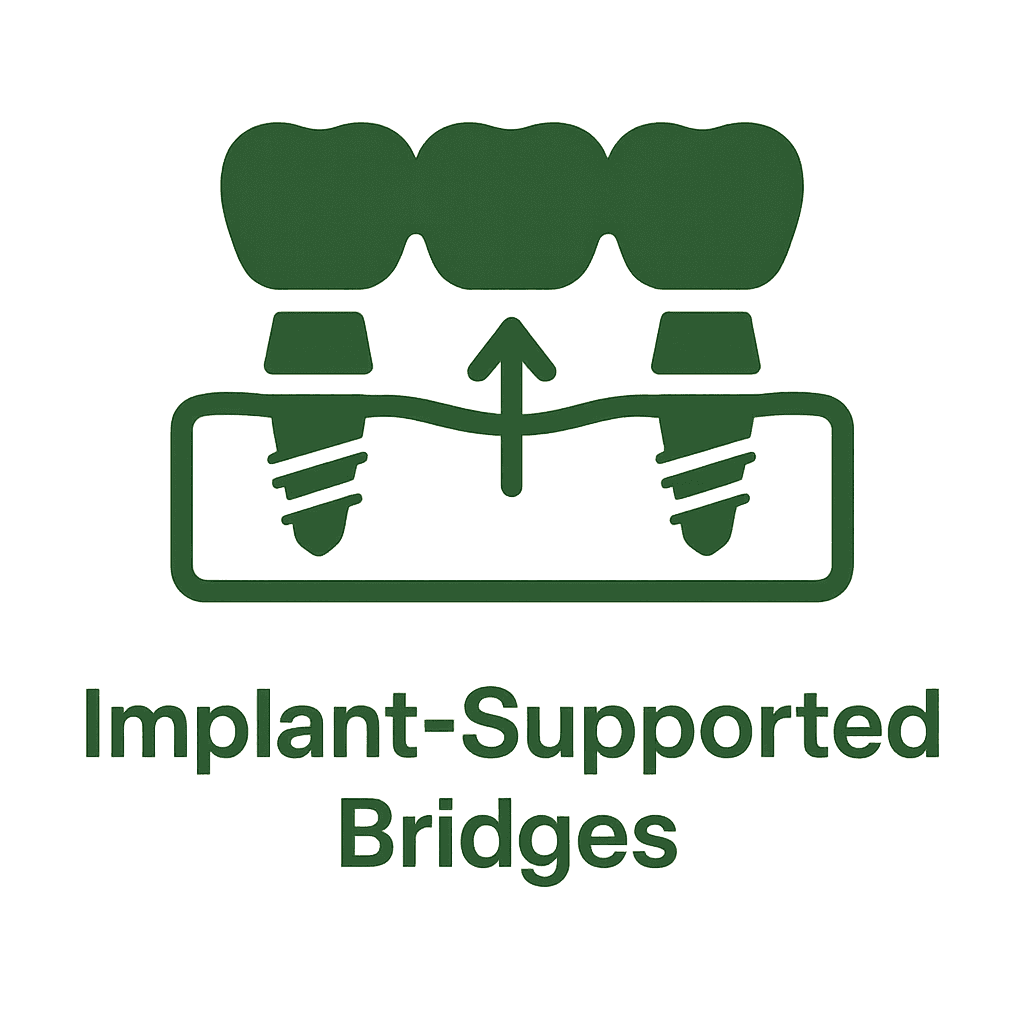
Unlike a traditional bridge that relies on your natural teeth for support (often requiring them to be ground down), this advanced restoration is anchored entirely by dental implants. It is a freestanding, solid structure that restores your bite, preserves your jawbone, and protects your healthy, natural teeth.

Why Choose Gardens for Your Bridge?
Restoring a span of missing teeth requires precise engineering. Here is why patients in Palm Beach Gardens trust Dr. Hans Almanzar for their implant care:
Bone Preservation Focus: We use implants to stimulate the jawbone, preventing the "sunken" facial look that occurs with tooth loss. Dr. Almanzar is an expert in placing implants to maximize bone health.
Protecting Healthy Teeth: We believe in conservative dentistry. By using implants to support the bridge, we save you from having to cut down your perfectly healthy adjacent teeth just to hold a replacement in place.
Custom Aesthetics: A bridge shouldn't look like a block of porcelain. We design each tooth in the bridge individually to look natural, with proper spacing and translucency that matches your smile.
PROCEDURE
The Implant Bridge Workflow
We have designed a seamless process to restore your smile efficiently and comfortably.
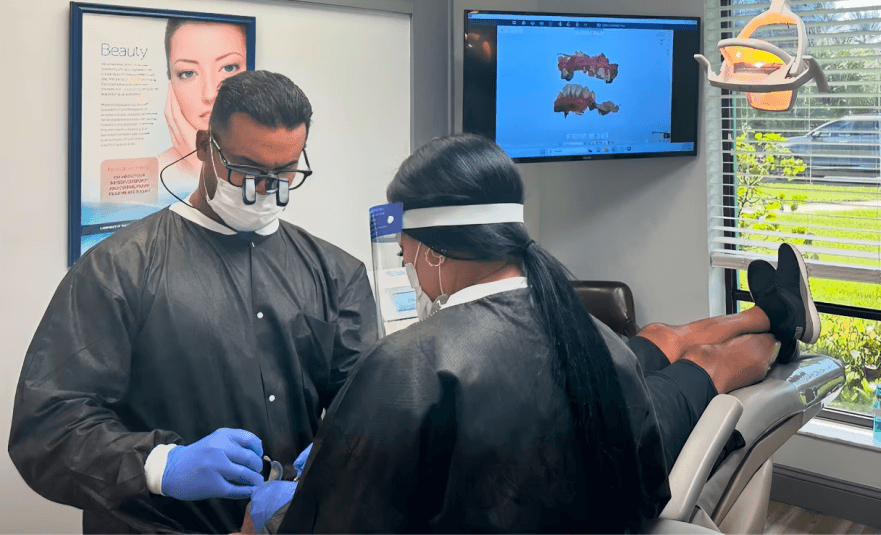
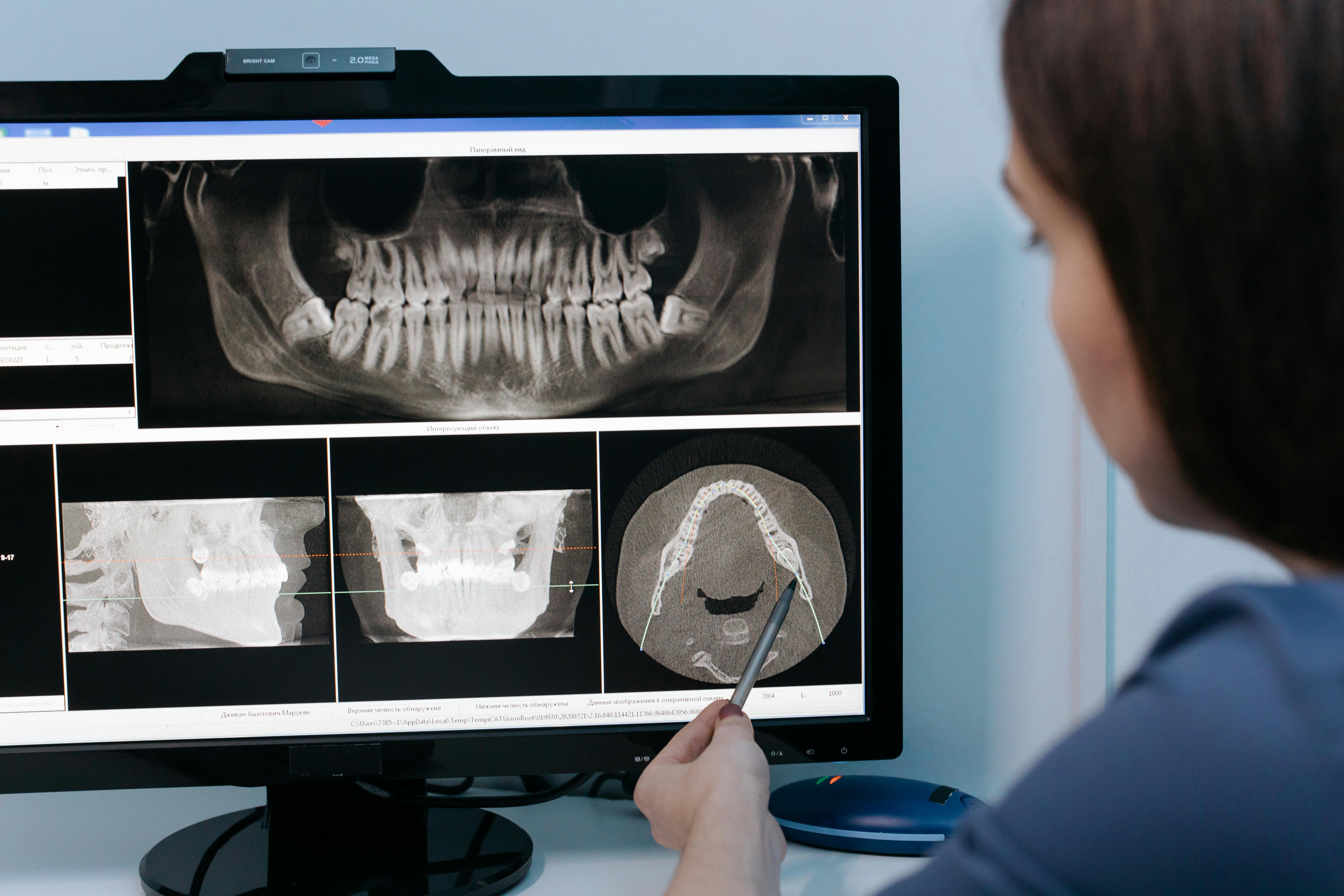
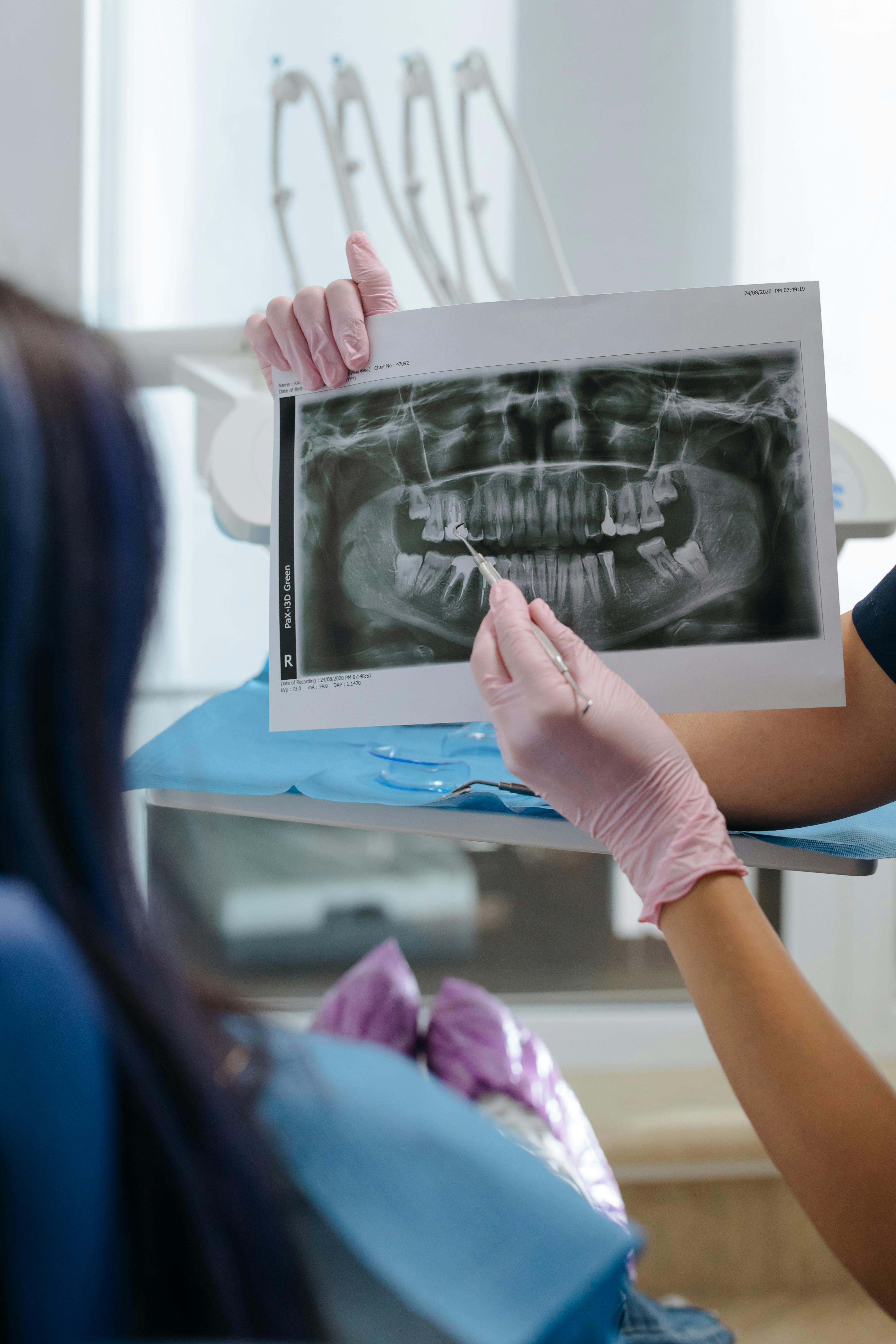
3D Planning: We use CBCT scans to map your nerves and bone. We determine exactly where to place the two (or more) implants to support the bridge securely.
Surgical Placement: Dr. Almanzar places the titanium implants into the jawbone. This is typically done under local anesthesia or sedation for your comfort.
Healing (Osseointegration): Over 3-4 months, the implants fuse with your bone, becoming solid anchors. You may wear a temporary appliance during this time so you don't have a gap.
Fabrication & Placement: Once healed, we take a digital impression to craft your custom bridge. About two weeks later, we permanently screw or cement the bridge onto the implants. You leave with a solid, complete smile.
TESTIMONIAL
Patient Success Story: No More Partial Denture
Actual Patient Scenario
The Challenge: "Thomas," a 58-year-old, lost three back teeth on his lower right side. He had a removable partial denture, but he hated the metal clasps showing when he smiled, and food always got stuck underneath it. He stopped wearing it, which made chewing difficult.
The Solution: Dr. Almanzar recommended an implant-supported bridge. We placed two implants, one at each end of the gap, to support a solid bridge of three zirconia teeth.
The Result: Thomas was thrilled. The metal clasps were gone, and the new teeth didn't move. He could brush them just like his natural teeth. He told us, "It feels like part of me. I wish I had done this years ago instead of messing with that partial."
FAQs
Frequently Asked Questions
How is this different from a regular bridge?
A Traditional Bridge grinds down the natural teeth on either side of the gap to use them as anchors. An Implant-Supported Bridge uses dental implants as the anchors, leaving your natural teeth untouched and healthy.
How many implants do I need?
Typically, to replace 3 or 4 teeth in a row, we only need two implants, one at each end. The bridge "spans" the distance between them. This makes it more cost-effective than replacing every single missing tooth with its own implant.
Is it hard to floss?
Because the teeth are connected, you cannot floss between them like natural teeth. However, hygiene is easy. We will show you how to use a "water flosser" or special floss threaders to clean underneath the bridge and keep your gums healthy.
How long does it last?
The titanium implants are designed to be permanent. The bridge itself (the porcelain teeth) is extremely durable and can last 15-20 years or longer with proper care and regular check-ups.
Is it painful?
Most patients are surprised by how easy the recovery is. Placing two implants is often less painful than having a tooth extracted. We keep you completely numb, and most patients return to work the next day.