What Age Is Too Young or Too Old for Dental Implants?
Discover dental implant age considerations. Learn when patients are too young or old for dental implants, health requirements for implant candidacy by age, and alternatives.

Introduction
There's a common misconception that dental implants are only for younger people or that seniors are too old to benefit from them. The reality is far more nuanced. Age itself is rarely a contraindication for dental implants—what matters most is bone health, overall systemic health, and ability to maintain implants through proper oral hygiene after placement. Let's explore the age considerations for dental implants that truly matter.
Minimum Age for Dental Implants: Why Young Patients Must Wait Before Getting Implants
TLDR – Dental Implant Age Considerations:
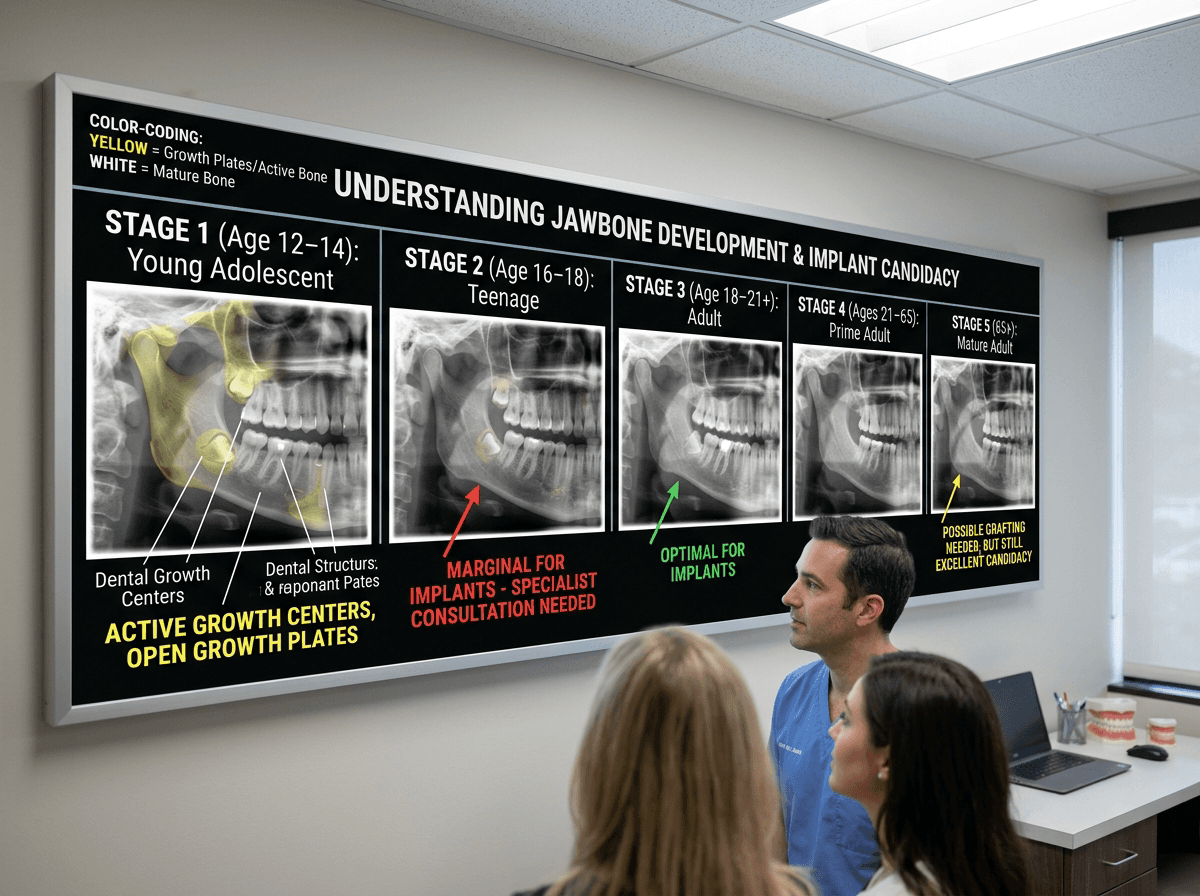
Under 16 years old: Not recommended for implants (jawbone still developing; implants can impede growth)
16–18 years old: Possible with orthodontist approval for implants (most surgeons prefer waiting until 18–21)
18–21+ years old: Optimal for implant candidacy if bone fully developed (jawbone growth complete)
Young to middle-aged adults for implants (21–65): Ideal implant candidates (highest dental implant success rates)
Seniors for implants (65+): Excellent implant candidates if medically healthy (age alone is not a barrier to implants)
Oldest implant patients: Successfully placed in patients 90+ years old receiving dental implants
Key factor for implants: Bone maturity, not calendar age determining implant suitability
The primary reason to delay dental implants in young patients is ongoing jaw development limiting implant placement. Between ages 12–18, the jawbone is still growing and remodeling, affecting implant readiness. Placing a dental implant in actively developing bone can interfere with natural growth, potentially creating alignment problems, bite issues, and implant failure over time. Additionally, the bone around the implant may shift as the jaw continues growing after implant placement, destabilizing the restoration.
Most orthodontists and oral surgeons recommend waiting until at least age 16–18 before implants, and preferably age 18–21 before getting dental implants. By this age, jawbone growth is essentially complete in most patients evaluated for implants. However, individual variation exists—some patients may complete jaw development earlier or later affecting implant timing. A consultation with an experienced implant specialist can determine whether your specific jaw growth is complete before pursuing implants.
For younger patients with missing teeth affecting their life before implant eligibility, temporary solutions exist: traditional dentures for young patients, removable partial dentures before implants, or dental bridges before getting implants can replace teeth while you await full skeletal maturity for implants. Once jaw growth is complete (usually by age 18–21), permanent dental implant placement becomes an option.
Young Adults to Middle Age for Implants (21–65): The Optimal Implant Candidacy Years
Patients aged 21–65 are typically ideal candidates for dental implants. Bone is fully developed for successful implant placement, systemic health is generally stable for implants, and patients have decades of remaining life to benefit from implants' 25–30+ year lifespan for the younger implant recipient. Success rates for this prime implant candidacy age group consistently exceed 95% for dental implants.
Young adults should prioritize timely dental implant placement promptly after tooth loss because delaying even 6–12 months allows significant bone loss affecting implant success to occur. When bone is healthy and abundant, dental implant placement is straightforward, and osseointegration proceeds reliably without complications. If you're between ages 21–65 with missing teeth, dental implants should be your first consideration—they offer superior outcomes compared to delayed implant treatment.
For patients in this prime implant candidacy range with systemic health conditions (diabetes, heart disease, etc.), dental implants are still usually possible if the conditions are well-controlled for implant success. Work closely with your physician and dentist to optimize your health before implant surgery if you're considering implants in this age range.

Seniors Getting Implants (65+): Age Is No Barrier for Older Implant Patients—Health Matters Most
Can seniors get dental implants? Absolutely yes—seniors make excellent implant candidates. In fact, many dental practices report that their most satisfied dental implant patients are seniors, who finally restore full oral function after years of denture frustration or tooth loss affecting their implant interest. Seniors are increasingly pursuing dental implants for quality of life.
Numerous studies on senior dental implants demonstrate that implant success rates in healthy 70-year-old patients receiving implants are virtually identical to success rates in 40-year-old patients getting implants. What changes with age regarding implants is not the ability to osseointegrate—it's overall health status and medication use affecting implant candidacy. A healthy 80-year-old may be a better implant candidate than a 50-year-old with multiple uncontrolled medical conditions affecting implant suitability.
Key considerations for senior dental implant candidates:
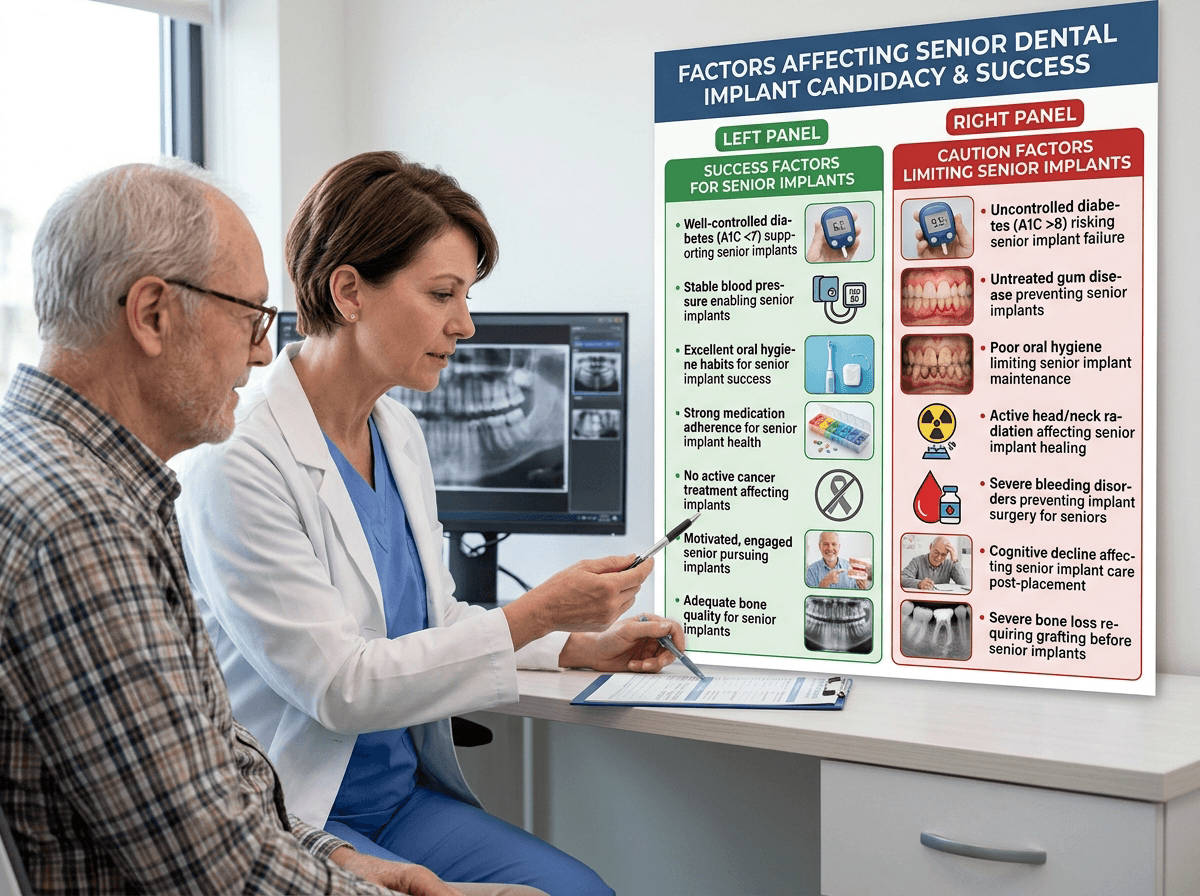
Bone quality for senior implants: Seniors often experience bone loss requiring grafting for implants from years of missing teeth or denture wear affecting implant readiness. This may require bone grafting for senior implants or sinus lift procedures for senior implants to establish adequate support for senior implant placement. While these additional implant procedures add cost and time, they're highly predictable and successful in healthy seniors pursuing implants.
Medications affecting senior implants: Seniors typically take multiple medications that may affect implants. Most are compatible with dental implants, but some affect bone metabolism or healing around implants. Blood thinners (warfarin, apixaban) require temporary adjustment before implant surgery. Bisphosphonates (taken for osteoporosis affecting bone for implants) can rarely cause complications with implants. Always disclose your full medication list during your implant consultation if you're a senior.
Systemic health and senior implant candidacy: Well-controlled diabetes, heart disease, hypertension, and other conditions rarely prevent senior implant placement. Uncontrolled diabetes or active cancer treatment may warrant postponement until health improves before pursuing implants. Your primary care physician should clear you for elective implant surgery before proceeding as a senior candidate.
Cognitive ability and senior implant maintenance: Dental implants require lifelong maintenance (daily brushing, flossing, professional cleanings every 3–6 months) affecting implant success for seniors. Seniors with cognitive decline may struggle with this commitment to implant maintenance. In such cases, dentures for seniors or implant-supported dentures for seniors offer easier maintenance for older patients.
Motivation and senior implant success: Seniors who are motivated, engaged with their oral health, and seek to restore function and confidence are excellent dental implant candidates—regardless of age beyond 65 getting implants.
Special Case: Seniors Over 80 Successfully Getting Dental Implants
Yes, patients in their 80s and even 90s have successfully received dental implants for seniors. Published case studies show implant success rates remain high in this advanced age group when patients are medically fit for implant surgery. The determining factor for very old implant patients is health status and bone quality—not chronological age beyond 80 for implants.
Many seniors over 80 report that dental implants dramatically improve quality of life: the ability to eat comfortably without implant limitations, speak clearly with implants, smile confidently with dental implants, and avoid the inconvenience of denture maintenance. For a 75-year-old with a 15–20 year life expectancy pursuing implants, dental implants offer 1–2 decades of reliable tooth replacement for seniors, making them worthwhile investments for older patients.

Absolute Contraindications: When Age Combines With Other Factors Preventing Implants
While age rarely alone prevents dental implants, certain combinations warrant caution for implant candidacy:
Young patients (under 16) with dental implant concerns:
Active jaw growth (confirmed by orthodontist) affecting implant suitability
Severe bone loss requiring grafting for implants requiring complex implant grafting
Uncontrolled gum disease affecting implant candidacy or poor oral hygiene habits limiting implant success
Medical conditions affecting implant healing (immunosuppression, active cancer treatment for implant patients)
Seniors (any age) with implant contraindications:
Uncontrolled diabetes (A1C >8) affecting senior implant success
Active head/neck radiation therapy for cancer affecting implant healing
Uncontrolled bleeding disorders preventing implant surgery
Severe cognitive decline affecting ability to maintain implants post-placement
Systemic illness making implant surgery unsafe (severe heart disease, uncontrolled hypertension for implant candidates)
In these cases, traditional dentures as implant alternatives, removable partial dentures instead of implants, fixed dentures as implant alternatives, or implant-supported dentures as implant compromises offer excellent alternatives to traditional implants.
The Real Question: Are You Healthy Enough for Dental Implants?
Rather than asking "Am I too old for dental implants?" ask instead: "Am I healthy enough for dental implants?" Health status, bone quality, and commitment to oral hygiene matter infinitely more than age for implant suitability. A healthy 75-year-old is a better implant candidate than an unhealthy 45-year-old with uncontrolled diabetes, active gum disease limiting implant success, and poor oral hygiene affecting implants.
Ready to find out if you're a good dental implant candidate regardless of age? Age is just a number for implant evaluation. Schedule a comprehensive implant consultation with our specialists at Gardens Implant & Cosmetic Dentistry. We'll evaluate your bone quality, health status, and goals to determine whether dental implants are right for you—regardless of your age. Call (561) 691-1629 or book your free consultation.
Blog


