How Many 70-Year-Olds Still Have All Their Teeth? The Numbers May Surprise You
The data on tooth loss in seniors is striking. See what CDC and NIDCR research says about tooth retention at 70 — and what your options are if you're missing teeth.
Most People Over 70 Have Lost at Least Some Teeth, Many Have Lost Far More
The data from federal health agencies tells a clear story
According to the CDC's 2024 Oral Health Surveillance Report, about 10.6% of adults between the ages of 70 and 74 have lost all of their teeth, and that figure rises to 17.8% for adults 75 and older (CDC, 2024). Having a complete set of 32 teeth at age 70 is genuinely uncommon. NIDCR data shows that 17.3% of all seniors 65 and older have no remaining teeth at all (NIDCR, Tooth Loss in Seniors). Tooth loss at this scale isn't inevitable, but it is the reality for a large portion of older adults, and it has real consequences for nutrition, speech, and quality of life.

What the Statistics Tell Us About Senior Tooth Loss
Partial tooth loss is even more widespread than full edentulism
Complete edentulism gets the most attention, but partial tooth loss is far more common and often more clinically complex. Many adults in their 60s and 70s are living with 10, 12, or 15 missing teeth, managing with a combination of remaining natural teeth, dentures, and bridges that may no longer fit well. Non-Hispanic Black seniors experience complete tooth loss at 25.4%, compared to 10.9% for non-Hispanic white seniors, a gap driven largely by access to preventive care over a lifetime (CDC NCHS Data Brief 368). If you've already lost several teeth and are wondering what reconstruction looks like, our dental implants service page walks through the options from single implants to full-arch solutions.
Tooth loss isn't just cosmetic, it's a health issue
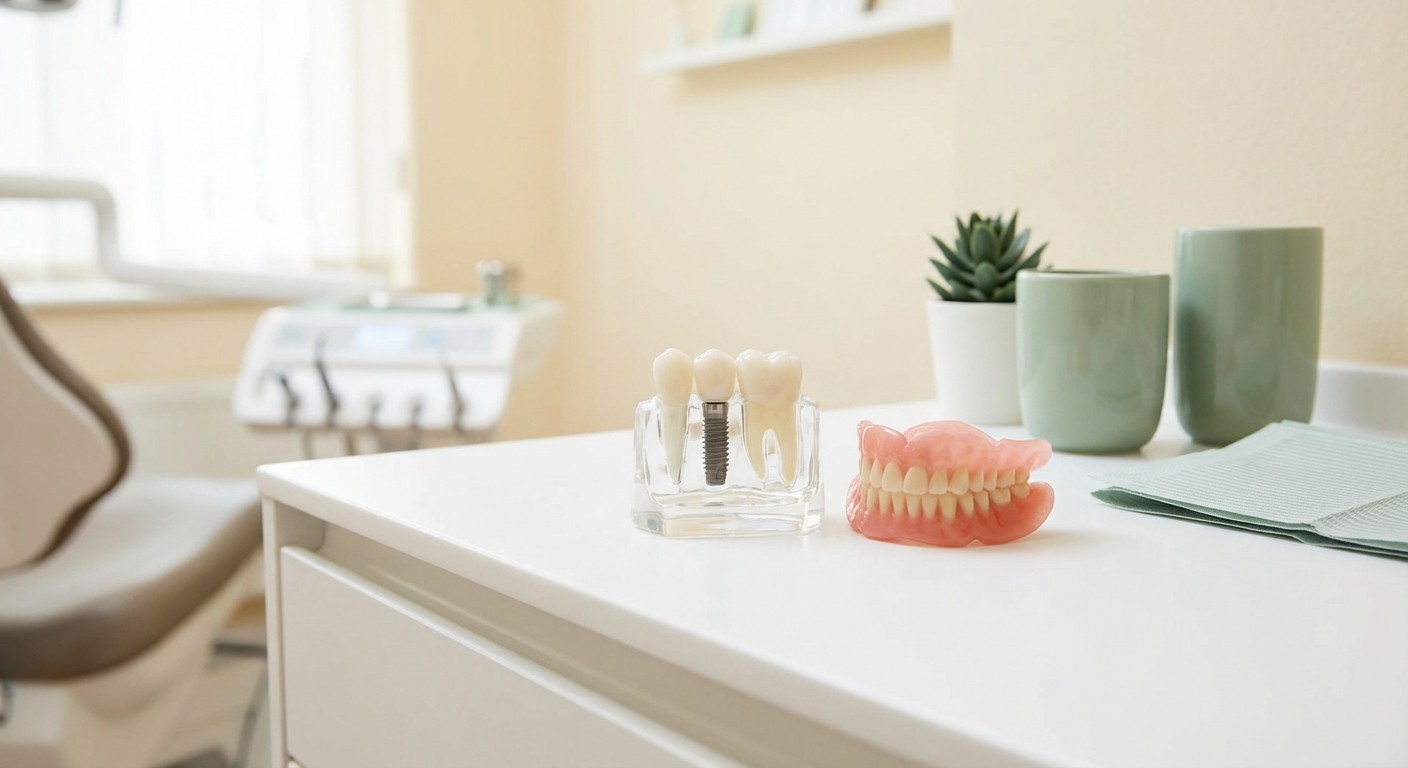
When teeth are missing, the jawbone underneath begins to shrink through a process called resorption. Over time, this changes facial structure, affects bite mechanics, and makes future implant placement more complex. Dentures don't stop this process. Only implants, which fuse to the bone and stimulate it the way tooth roots do, preserve bone density over time. Patients who've been in dentures for 10 or 15 years often have significantly less bone to work with than they did when they first lost their teeth. That's why timing matters. Our All-on-4 service page outlines what's possible even in cases with significant bone loss.

If you're in your 60s or 70s and either missing teeth or wearing a denture that no longer feels secure, you're far from alone. The difference is that today's implant technology is genuinely better suited for older patients than it was even a decade ago. At Gardens Implant & Cosmetic Dentistry, Dr. Almanzar works with patients across a wide range of ages and bone conditions. Age alone is not a disqualifier for implants. Health status, bone quality, and your personal goals matter far more.
Ready to find out if dental implants are right for you? Schedule a free consultation at Gardens Implant & Cosmetic Dentistry — serving Palm Beach Gardens, Jupiter, and North Palm Beach.
Blog