
OUR SERVICES
Oral Cancer Screenings
Oral Cancer Screenings: A Two-Minute Exam That Could Save Your Life
When you think of the dentist, you probably think of cavities and cleanings. But your dental visit is also the first line of defense against a silent but serious health threat: Oral Cancer.
At Gardens Implant & Cosmetic Dentistry, we believe in treating the whole patient. That is why we include a comprehensive Oral Cancer Screening as a standard part of your complete dental examination.
Oral cancer is rising, even among healthy non-smokers. The danger of oral cancer lies in its ability to go unnoticed in its early stages. It often starts as a tiny, painless white or red spot that is easy to miss in the mirror. By the time it causes pain, it has often spread. Our goal is to catch these changes early, when treatment is most effective, and cure rates are highest.

Why Choose Gardens for Your Screening?
You need a team that looks beyond the teeth to ensure your entire oral cavity is healthy. Here is why patients in Palm Beach Gardens trust us with their preventative care:
Thorough Diagnostics: We don't just glance at your teeth. Dr. Sujit Shakya and our team are trained to recognize the earliest pathological changes in the soft tissues of the mouth, throat, and neck.
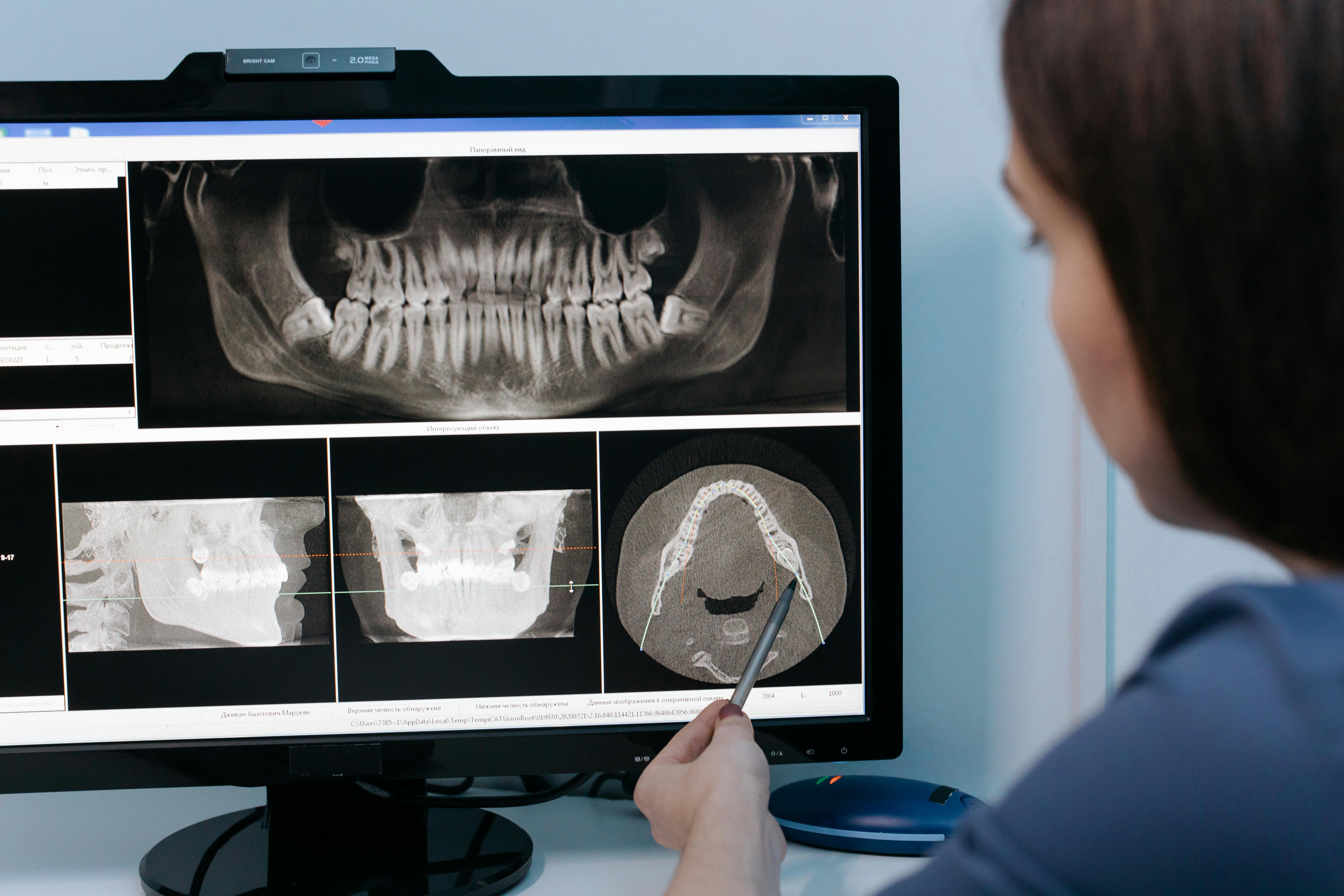
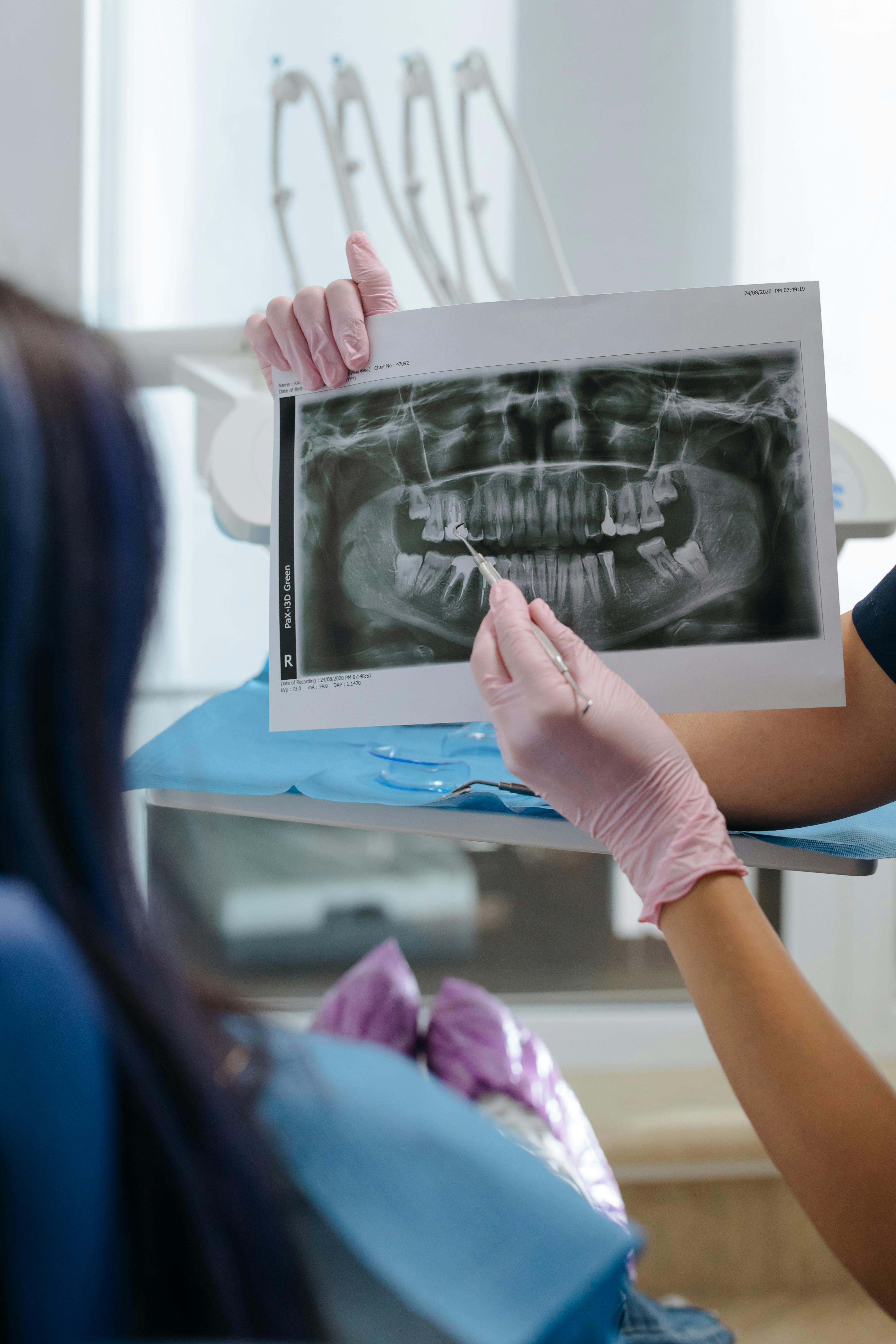
Advanced Technology: We utilize high-definition digital imaging and modern screening protocols to identify suspicious areas that might be invisible to the naked eye.
Integrated Care: If we find something suspicious, we don't leave you guessing. We have an established network of oral surgeons and pathologists to ensure you get a biopsy and diagnosis quickly. We guide you through every step.
PROCEDURE
What Happens During a Screening?
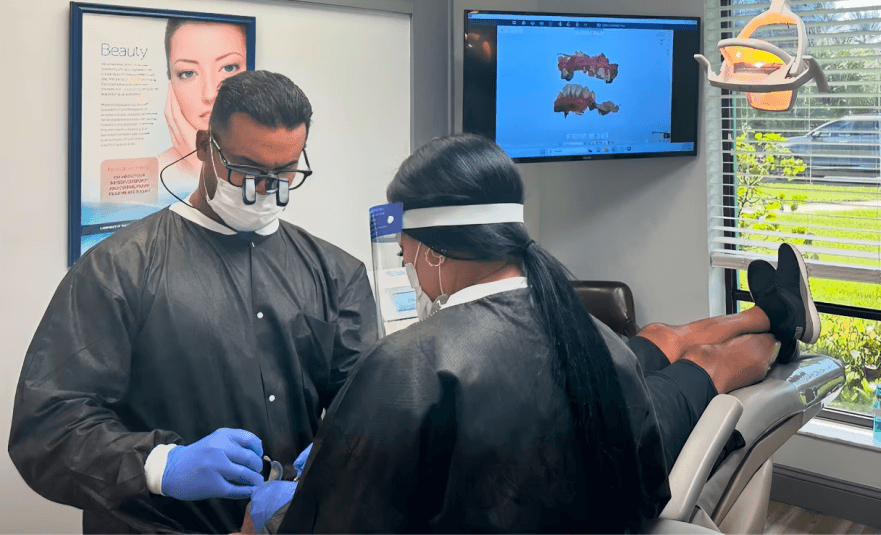
The screening is fast, painless, and non-invasive. It typically takes less than five minutes during your routine check-up.
Visual Exam: The doctor will examine the soft tissues of your mouth, including the roof of your mouth, the floor of your mouth, your tongue, cheeks, and the back of your throat. We look for discolorations, ulcers, or bumps.
Physical Exam (Palpation): The doctor will gently feel (palpate) your jaw, neck, and the area under your chin. We are checking for swollen lymph nodes or unusual lumps that shouldn't be there.
Tongue Exam: We will ask you to stick out your tongue and move it side to side. The sides of the tongue are a common "high-risk" area for oral cancer that patients often miss when brushing.
Review: If everything looks healthy, you are good to go! If we see an area of concern, we may simply photograph it to monitor it for two weeks or recommend a biopsy if it looks suspicious.

TESTIMONIAL
Patient Success Story: The Value of Routine Care
Actual Patient Scenario
The Challenge: "Linda," a 55-year-old non-smoker, came in for a routine cleaning. She felt perfectly healthy and had no pain. She almost canceled the appointment because she was busy with work.
The Discovery: During her exam, Dr. Shakya noticed a small, slightly white patch on the side of her tongue. It wasn't painful, but it looked unusual. Linda had never noticed it.
The Solution: We referred Linda for a simple biopsy. The results came back as severe dysplasia (pre-cancerous cells). Because it was caught so early, it was removed with a minor procedure.
The Result: Linda made a full recovery with no need for radiation or chemotherapy. She told us, "I shudder to think what would have happened if I skipped that cleaning. That simple exam saved my life."
FAQs
Frequently Asked Questions
Who is at risk for oral cancer?
While tobacco and heavy alcohol use are major risk factors, the fastest-growing segment of oral cancer patients is healthy, young non-smokers. This is largely due to the HPV virus. This is why everyone needs to be screened, regardless of lifestyle.
What are the symptoms I should look for?
Be on the lookout for:
A sore or ulcer that doesn't heal within two weeks.
Red or white patches on the gums, tongue, or lining of the mouth.
A lump or thickening in the cheek or neck.
Difficulty chewing, swallowing, or moving the tongue.
Numbness in the tongue or mouth.
Does the screening hurt?
Not at all. It involves looking and gently feeling your neck and jaw. It is completely non-invasive.
How often should I get screened?
We recommend an oral cancer screening at least once every year, or during every six-month check-up.
Does insurance cover it?
A visual oral cancer screening is considered part of a standard comprehensive or periodic dental exam, which is typically covered by dental insurance.