Why Do I Need Dental X-Rays Every Year?
Learn why dentists recommend annual dental X-rays in 2026. Understand ADA guidelines, safety, what X-rays detect, and early problem prevention at Gardens Implant & Cosmetic Dentistry.
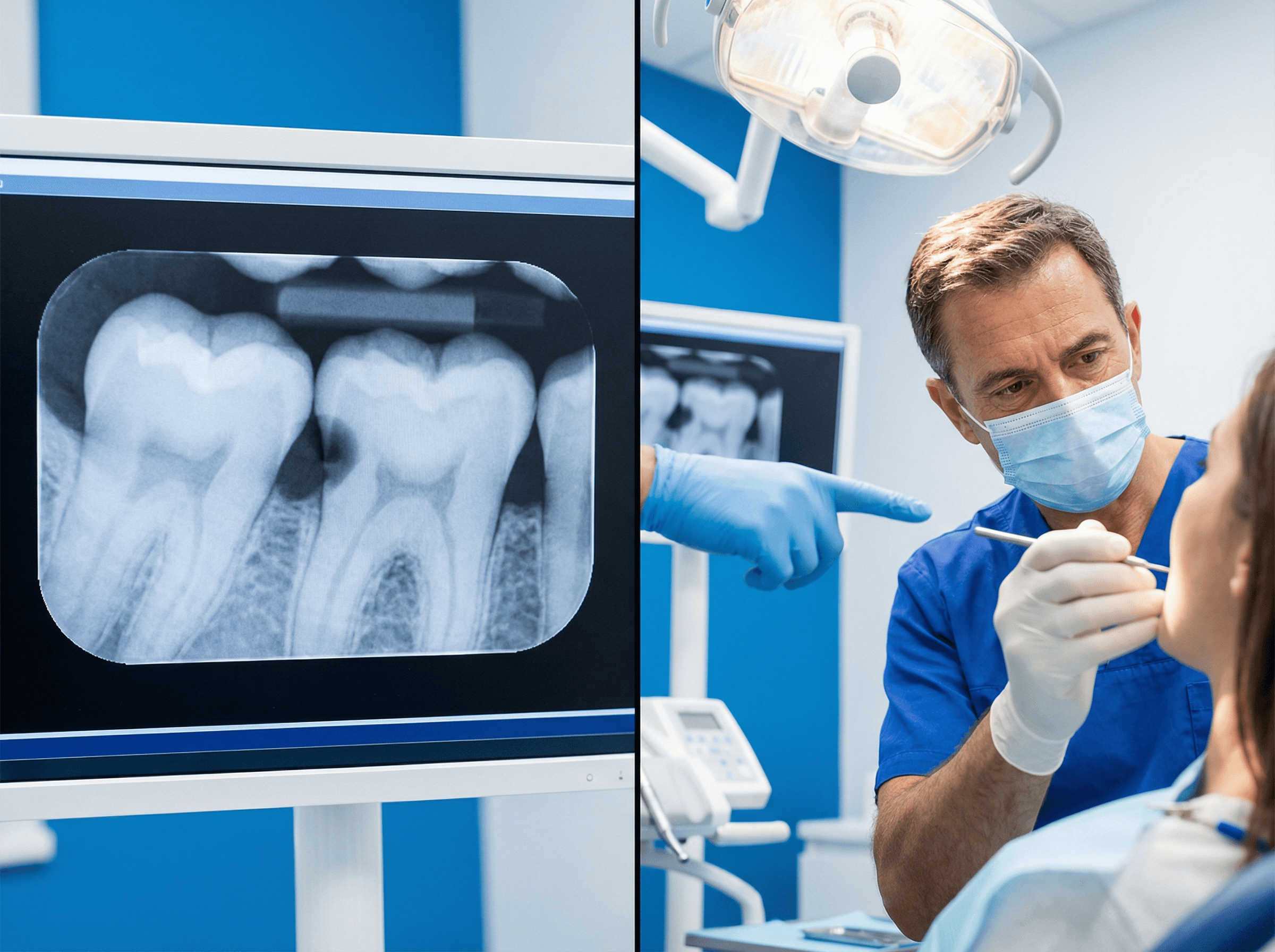
If your dentist recommends annual X-rays, you're wondering if they're really necessary—and whether they're safe. In 2026, the American Dental Association confirms that X-rays are an essential diagnostic tool when used appropriately. Dental X-rays detect problems invisible to the naked eye: cavities between teeth, bone loss beneath gums, infections at tooth roots, and early gum disease. For patients wanting to avoid expensive emergency dentistry and tooth loss, annual X-rays (or X-rays on a schedule recommended by your dentist) are a smart investment in preventive care.
In this guide, we'll explain what dental X-rays detect, why your dentist recommends them, 2026 ADA guidelines, address safety concerns, and show you how early detection often qualifies for insurance coverage at Gardens Implant & Cosmetic Dentistry in Palm Beach Gardens.
TLDR - Key Takeaways:
What X-Rays Detect: Cavities between teeth, bone loss from gum disease, root infections, and hidden pathology invisible to the naked eye.
2026 ADA Guidelines: Patients with healthy teeth may need X-rays every 2-3 years; patients with risk factors (history of cavities, gum disease, existing dental work) need annual X-rays.
Safety: Modern digital X-rays deliver 50-80% less radiation than older film X-rays. A full mouth of dental X-rays exposes you to less radiation than a cross-country flight.
Cost of Skipping: Undetected cavities progress from $300 fillings to $1,500 root canals. Undetected bone loss leads to tooth loss requiring $2,500-$3,500 implants.
Insurance Coverage: Most dental plans cover routine X-rays at 100% with no copay as preventive care.
Bottom Line: Annual X-rays detect problems early when they're cheapest and easiest to treat, preventing expensive emergency dentistry and tooth loss.

What Can Dental X-Rays Detect That Your Dentist Cannot See?
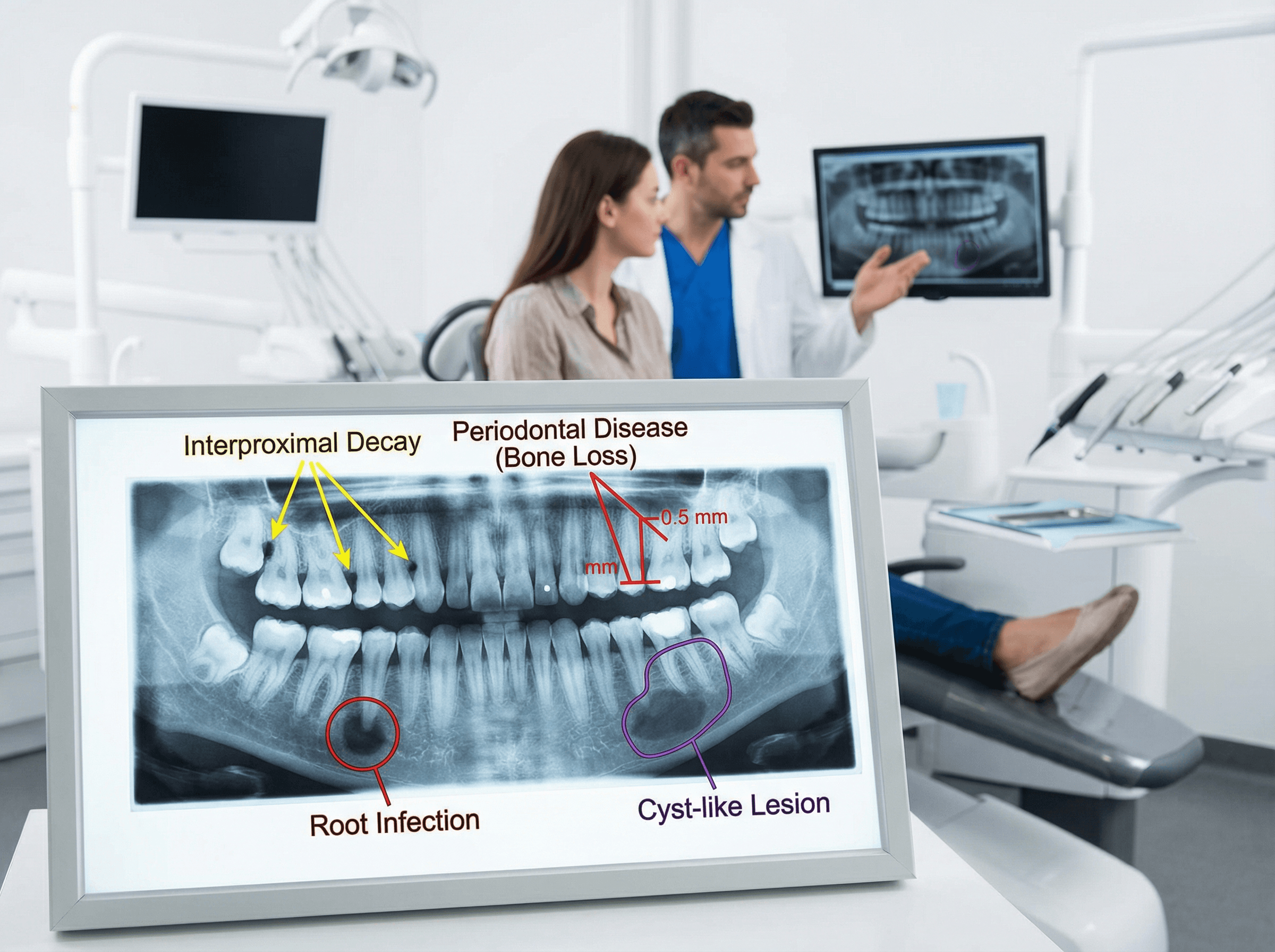
Your dentist examines your mouth visually, but teeth have multiple surfaces and infections can hide in places impossible to see. Dental X-rays detect:
Cavities Between Teeth (Interproximal Decay)
Cavities commonly form between teeth where your toothbrush can’t reach. A small cavity between two teeth can be well-developed before causing pain. By then, it may have reached the nerve, requiring a root canal ($800-$1,500) instead of a simple filling ($150-$300). X-rays spot these cavities when they’re small enough for filling. Your insurance usually covers X-rays at 100% as preventive imaging.
Bone Loss from Gum Disease
Gum disease progresses silently. Your gums might appear healthy while bone underneath dissolves. Bone loss is invisible clinically but obvious on X-rays. Early detection allows treatment with scaling and root planing ($300-$600) and advanced options like LANAP ($1,500-$2,000), preventing tooth loss far more effectively than treating advanced disease.
Root Infections & Abscesses
A tooth that looks fine on the surface might have an infection at its root, causing chronic pain or none at all. This abscess is invisible clinically but obvious on X-rays. Untreated infections lead to tooth loss and serious systemic complications. A root canal detected early is far less expensive than extraction and implant replacement later.
Cysts, Tumors & Other Pathology
Jaw cysts, benign tumors, and oral pathologies develop silently and are discovered only through X-rays. While rare, early detection prevents serious complications. Annual X-rays provide baseline images for monitoring changes.
Updated 2026 ADA Guidelines: How Often Do You Really Need X-Rays?
In January 2026, the American Dental Association updated guidelines, emphasizing X-rays should be used “when clinically necessary.” Here’s what this means:
Patients with Healthy Teeth (Low Risk)
If you have no disease signs, no cavity history, excellent home care, and healthy gums, the ADA suggests X-rays every 2-3 years. However, many dentists still recommend annual exams because early problems are easier to treat at the 1-year mark than waiting 2-3 years.
Patients with Risk Factors (Moderate to High Risk)
Annual X-rays are recommended if you have: history of cavities or fillings, signs of gum disease or bone loss, tooth sensitivity or pain, existing dental work (crowns, implants, root canals), smoking habit, diabetes, immunosuppression, or are over 55. Most adults fall into this category, making annual X-rays standard at Gardens Implant & Cosmetic Dentistry.
Are Dental X-Rays Safe? Understanding Radiation Exposure
Modern dental X-rays are extremely safe. Digital X-rays use 50-80% less radiation than older film X-rays while providing better image quality. A single dental X-ray delivers approximately 0.005 millisievert (mSv)—less radiation than a cross-country airplane flight or natural background radiation you receive daily. A full mouth of X-rays (18 images) delivers about 0.09 mSv, far below harmful levels. The benefit of early detection far outweighs the negligible radiation risk. At Gardens Implant & Cosmetic Dentistry, we use state-of-the-art digital X-ray technology, ensuring minimal exposure while providing excellent diagnostic information.
Frequently Asked Questions
Are dental x-rays safe?
Yes, dental x-rays use very low levels of radiation and are considered safe for both adults and children. Modern digital x-rays further reduce exposure.
How often should I get dental x-rays?
Most patients in Palm Beach Gardens benefit from dental x-rays once a year, but your dentist may recommend a different schedule based on your oral health needs.

The Real Cost of Avoiding Annual X-Rays
Scenario 1: Undetected Cavity - A small cavity between teeth develops silently. Without annual X-rays, you don't know it exists. By the time you feel pain, the cavity has reached the nerve, requiring a $1,500 root canal instead of a $300 filling.
Scenario 2: Undetected Bone Loss - Early gum disease causes silent bone loss. Without X-rays, you don't know until loose teeth or gum recession appears. By then, you've lost 30-50% of bone. Teeth are lost, requiring $2,500-$3,500 implants each. Early detection via X-rays allows treatment with $300-$2,000 options, preserving natural teeth.
Scenario 3: Undetected Root Infection - A silent root infection progresses undetected. Eventually, it causes pain or abscess. Early detection via X-rays allows timely root canal treatment, avoiding emergency dentistry fees and tooth loss.
What to Expect During Dental X-Rays
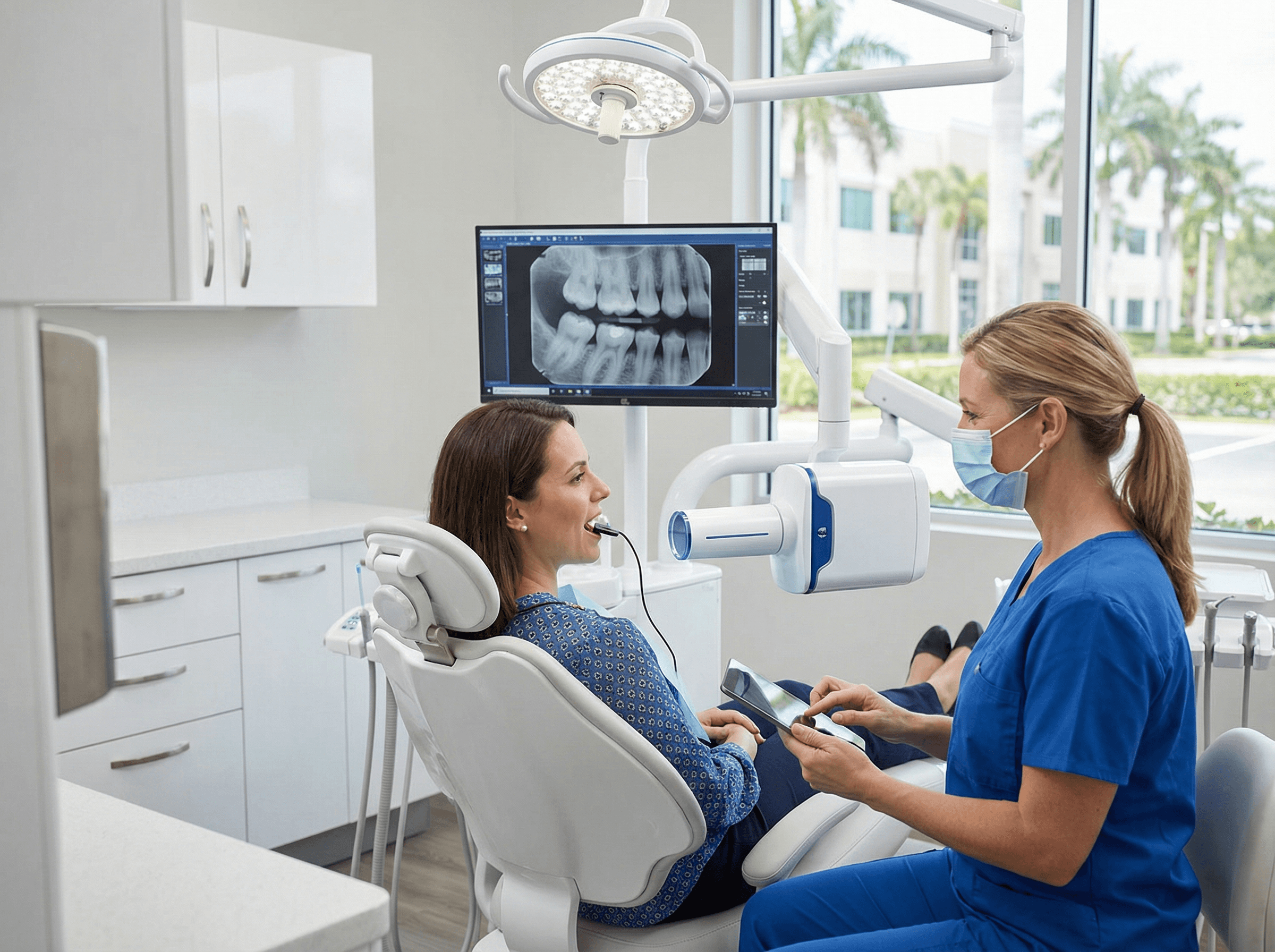
For bitewing X-rays (showing back teeth), you'll bite gently on a plastic tab while the X-ray sensor is positioned beside your teeth. The machine briefly emits X-rays—you'll hear a soft beep but feel nothing. The entire process takes seconds. For full-mouth X-rays, images of different mouth areas are taken, totaling under 5 minutes. Images appear immediately on a computer screen, and your dentist reviews findings with you, pointing out any issues and explaining needed treatment.
Insurance Coverage for Dental X-Rays
Most dental insurance plans cover X-rays as preventive care at 100%, with no copay. Routine X-rays (bitewings) are typically covered once per year. Full mouth X-rays are covered once every 3 years unless you're new to the practice or have a specific diagnostic reason. At Gardens Implant & Cosmetic Dentistry, we maximize your coverage and minimize out-of-pocket costs.
Why Annual X-Rays Matter at Gardens Implant & Cosmetic Dentistry
Dr. Hans Almanzar and Dr. Jesse Lemoine recommend annual X-rays for patients with any risk factors (most patients) because early detection saves money, preserves teeth, and prevents emergencies. We use state-of-the-art digital X-ray technology minimizing radiation while maximizing diagnostic detail. Our goal is not unnecessary imaging but catching problems early—when they're most treatable and affordable. We explain why we're recommending X-rays and what we expect to find, ensuring you understand the value.
Conclusion:
Annual dental X-rays are critical preventive care. They detect problems invisible to the eye—cavities, bone loss, infections—when treatment is simplest and most affordable. Radiation risk is negligible, and insurance covers X-rays at 100%. At Gardens Implant & Cosmetic Dentistry in Palm Beach Gardens, we use advanced digital X-ray technology providing clear images with minimal radiation. We explain exactly what we find and why recommended treatment is necessary.
Schedule your annual dental exam and X-rays today at (561) 691-1629. We serve Palm Beach Gardens, Juno Beach, North Palm Beach, and Jupiter. Let's catch problems early and keep your teeth healthy for life.
Blog