What Is the 3-2 Rule for Dental Implants? Spacing Explained
The 3-2 rule for dental implants: 3mm between adjacent implants, 2mm between implant and natural tooth. Why this spacing matters for long-term success.
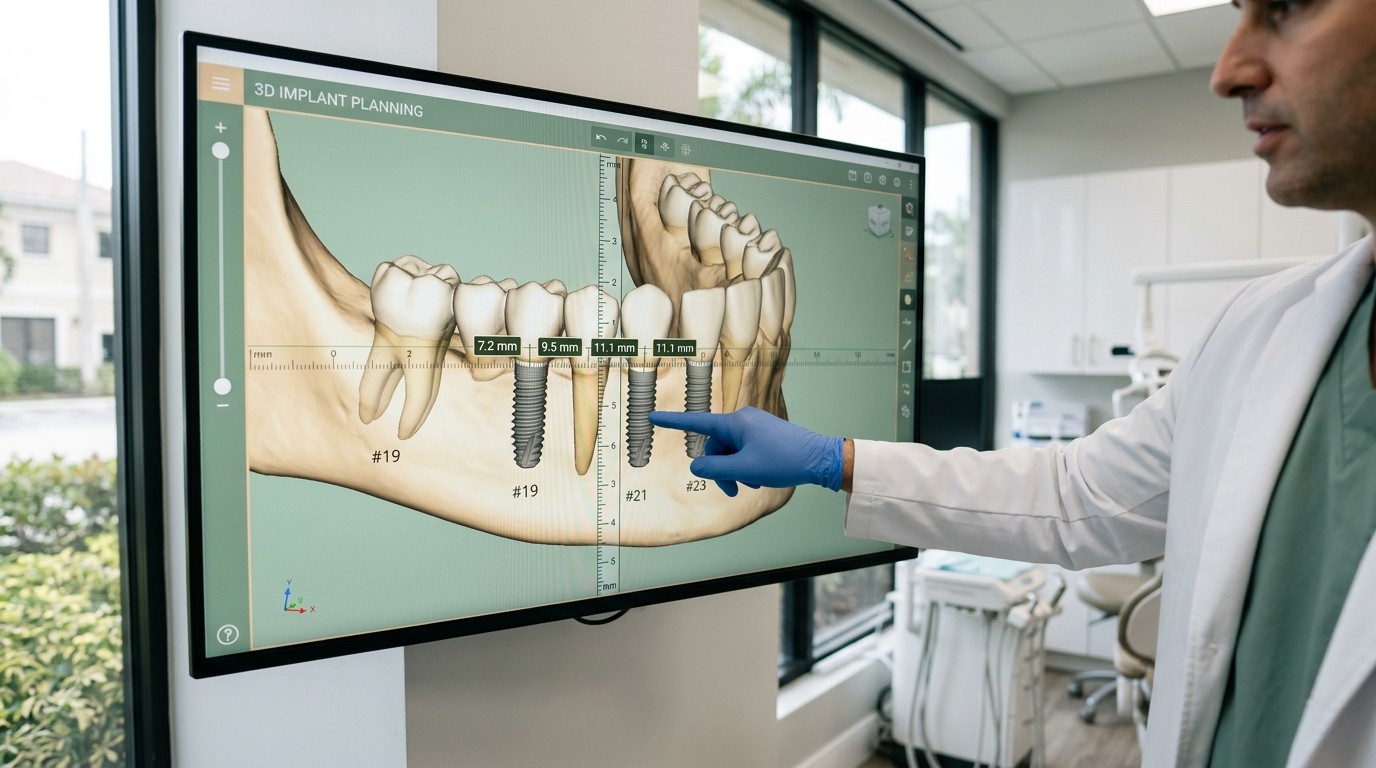
The 3-2 Rule, in Plain English
The 3-2 rule for dental implants is a clinical spacing guideline that says implants should be placed at least 3 millimeters from each other and at least 2 millimeters from any neighboring natural tooth. Research shows that placing implants too close to adjacent teeth or other implants can interfere with the blood supply to surrounding bone, increasing the risk of bone loss around the implant over time (PMC, NCBI). It's a small detail with large long-term consequences for whether your implant lasts five years or twenty-five.
Why the 3-2 Rule Matters for Long-Term Implant Success
TLDR – The 3-2 Spacing Rule:
Between two implants: Minimum 3mm of bone between them.
Between implant and natural tooth: Minimum 2mm.
Bone thickness alternative interpretation: 3mm of bone on the facial side of the implant, 2mm of soft tissue thickness.
Why it matters: Insufficient spacing reduces blood supply to the surrounding bone.
Consequences of violating it: Bone loss, peri-implantitis, soft tissue complications, implant failure.
Who follows it: Every reputable implant dentist. It's a foundational placement principle, not optional.
When two implants are placed too close together, or an implant is placed too close to a neighboring tooth, the small space between them does not have enough vascular supply to keep the surrounding bone healthy. Bone receives nutrients through capillaries in the soft tissue and through trabecular blood flow, and crowding compromises both. Over months to years, the bone in the constricted area resorbs, the gum recedes, and the implant becomes more vulnerable to infection. This isn't a hypothetical concern. Clinical research consistently shows that implants placed with appropriate spacing have better long-term outcomes than implants placed too close to one another or to adjacent teeth.
The other version of the 3-2 rule refers to bone dimensions around a single implant: 3mm of bone on the facial (cheek-side) surface, and 2mm of soft tissue thickness between the implant and the surrounding tooth. This version comes from research on the aesthetic zone (the front teeth visible when you smile), where insufficient bone thickness on the facial side leads to gum recession over time and a visible metallic shadow showing through the gum. Both interpretations of the 3-2 rule address the same underlying principle: implants need adequate biological space around them to remain healthy long-term.

When the 3-2 Rule Affects Your Treatment Plan
The 3-2 rule shapes treatment planning in two common situations. The first is when patients want to replace multiple adjacent missing teeth and assume each tooth gets its own implant. In some cases, that's correct. In other cases, particularly in narrow ridges or where bone has resorbed, placing one implant per tooth would violate the 3mm spacing rule. The standard solution is to place fewer implants and use a multi-unit bridge to span the gap. Two implants supporting three crowns is a textbook example: the spacing requirements are met, the bone supply is preserved, and function is identical to three individual crowns.
When Bone Grafting Becomes Necessary
When the existing bone is too narrow to satisfy the 3-2 rule, the answer is often bone grafting. Ridge augmentation widens the bone before implant placement, restoring enough volume to satisfy minimum spacing requirements. This adds three to six months to your timeline but turns a borderline case into a high-success-rate case. In the upper back where the maxillary sinus sits low, sinus lift procedures can add bone height to the same effect. Both procedures are predictable and routine, and they're worth doing right the first time to avoid implant failure later.
What This Means When You're Comparing Treatment Plans
If you're getting quotes from multiple practices, the 3-2 rule is a useful framework for evaluating treatment plans. Practices that propose more implants in a tighter space, especially without grafting, may be ignoring the spacing principles that determine whether your implants last. A treatment plan with fewer implants spaced correctly often produces better long-term outcomes than one with more implants crammed into limited bone. Ask your implant dentist to explain the spacing decisions in your plan and how they're checking against the 3-2 rule. Any reputable practice should be able to walk you through this clearly with reference to your 3D scan.

The 3-2 Rule Is About Long-Term Success, Not Short-Term Convenience
It's tempting to want more implants in a smaller space because it sounds more thorough, but the 3-2 rule reflects decades of clinical evidence about what actually works long-term. The implants you place at age 50 should still be functioning at 75. That outcome depends on respecting the biological constraints of bone and soft tissue, which means following spacing principles even when it means using fewer implants or adding a grafting step. We'd rather propose a slower, more conservative plan that lasts 25 years than a faster plan that needs revision in five.
Get a Treatment Plan That Respects the Biology
Want to make sure your implant plan follows clinical best practices? Our team at Gardens Implant & Cosmetic Dentistry, serving Palm Beach Gardens, Jupiter, and North Palm Beach, plans every case from a 3D CBCT scan and uses guided implant placement to ensure spacing requirements are met before we ever pick up an instrument. Schedule a comprehensive implant consultation to review your specific case. Call (561) 691-1629 or book your free consultation.
Blog