How Long After a Tooth Extraction Can You Get an Implant?
An implant can go in the same day as an extraction, or after 4 to 8 weeks, 12 to 16 weeks, or 6+ months. See how infection, bone and smoking change timing.
Written by Dr. Hans Almanzar, DDS, Gardens Implant & Cosmetic Dentistry, Palm Beach Gardens, Florida. Last reviewed October 13, 2026.
Quick answer
A dental implant can sometimes be placed the same day a tooth is removed, or after about 4 to 8 weeks, 12 to 16 weeks, or more than 6 months. These are the four standard timing types. Infection, bone, gum health and smoking decide which fits, and your dentist sets it after an exam and scan.
If you are about to lose a tooth, the wait can feel like the hardest part. This guide explains each timing type, why bone changes after an extraction, and what to ask. Treat these ranges as a map, not a promise.

What are the standard timing options after a tooth extraction?
Dentists group implant timing into four types, from the International Team for Implantology (ITI) classification. Type 1 is the same day as the extraction. Type 2 is about 4 to 8 weeks later. Type 3 is about 12 to 16 weeks later. Type 4 is more than 6 months later (Thoma et al., Journal of Periodontal Research, 2026).
ITI type | When the implant goes in | What is happening in the socket |
Type 1 (immediate) | Same day as the extraction | Socket is fresh, soft tissue not yet healed |
Type 2 (early) | About 4 to 8 weeks | Gum has closed over, bone has not changed much |
Type 3 (early) | About 12 to 16 weeks | Bone has partly filled in the socket |
Type 4 (late) | More than 6 months | Bone has fully healed |
Each type has trade-offs. Earlier placement can mean fewer procedures and a shorter timeline, but it depends more on the shape of your socket and gum. Later placement makes gum handling easier, but takes longer and may need grafting.
Can an implant be placed the same day as the extraction?
Sometimes, yes. Same-day placement is called immediate placement. It aims to keep bone volume, shorten treatment time and protect the gum shape, and it can be paired with a temporary tooth (Thoma et al., 2026). It is technique-sensitive, so not every socket qualifies.
A 2019 European consensus report on extraction sockets named six things that guide the choice (Tonetti et al., Journal of Clinical Periodontology, 2019):
Whether there is infection
Whether the implant can be held firmly in the ideal position
Whether the bony socket is damaged
The thickness and type of the gum and bone (periodontal phenotype)
How visible the tooth is when you smile (aesthetic demands)
Your general health
Most of this research covers single teeth, so multiple extractions need extra care. If one or two of these points is a problem, a later timing type is often the safer plan.
Why do some people wait 4 to 8 weeks, or longer?
Waiting gives the gum time to close and lets local infection settle. The Thoma review lists thicker soft tissue, easier gum handling and time for any local infection to resolve as advantages of Type 2 placement (Thoma et al., 2026).
It also reports that Type 2 placement lowers the risk of gum recession compared with immediate placement over the mid to long run, especially with thin gum tissue.
There is a trade-off. The review lists longer treatment time and a need for grafting as disadvantages of waiting, and the ridge keeps shrinking in the meantime.
What happens to your bone after a tooth is removed?
After an extraction, the jawbone around the empty socket shrinks, and most of the change happens in the first months. A systematic review of 20 studies found that at 6 months the ridge was about 3.79 mm narrower, and about 1.24 mm shorter on the cheek side (Tan et al., Clinical Oral Implants Research, 2012).
In studies that re-opened the site, bone loss was 29 to 63 percent in width and 11 to 22 percent in height after 6 months. Most of the change came in the first 3 to 6 months, then slowed. Waiting with no plan can leave less bone to work with.
What is socket preservation, and how long does it add?
Socket preservation, also called ridge preservation, is placing bone graft material into the socket right after an extraction to slow bone shrinkage. It usually adds healing time before the implant, but it can leave more bone to work with later on.
A 2019 review of 22 randomized trials found that grafting prevented about 1.99 mm of width loss and 1.72 mm of height loss at the mid-cheek side, compared with extraction alone, after 3 to 6 months of healing (Avila-Ortiz et al., 2019).
Results were better when the cheek-side bone wall was thicker than 1.0 mm.
Cleveland Clinic says a dental bone graft needs at least 3 months to heal, and a large graft may take 9 to 12 months. It advises placing the implant within 6 to 12 months after the graft heals, since waiting longer can shrink the graft (Cleveland Clinic, 2024). Read more about bone grafting for implants.
How do infection and the sinus change the timeline?
Infection and sinus position are two common reasons a plan gets longer. An active infection usually needs treatment before an implant goes in, and the upper back jaw may need extra bone. Neither necessarily rules out an implant. Each adds a step your dentist must plan around.
For infection, the answer is case by case. The 2019 consensus report lists infection among the factors that guide timing (Tonetti et al., 2019). The Thoma review lists resolution of local acute problems as an advantage of waiting 4 to 8 weeks, and says Type 2 suits sockets with minor infection (Thoma et al., 2026).
For the upper back jaw, the American Academy of Periodontology says bone is typically allowed to develop for 4 to 12 months before implants are placed after a sinus augmentation, depending on the person. Sometimes the implant can go in during the same procedure (AAP, 2026). See our page on sinus lift procedures.
How does smoking affect healing and timing?
Smoking slows healing, and that can affect both the extraction and the implant that follows. MedlinePlus explains that smoking lowers the amount of oxygen reaching the cells in a surgical wound, which can slow healing and raise infection risk (MedlinePlus, 2026).
MedlinePlus says most providers advise stopping tobacco at least 4 weeks before surgery, and that at least 10 weeks may reduce risk further. It also says nicotine gum around surgery is not encouraged. Quitting is hard. Tell us what you use, and we will plan around it without judgment. Our guide for smokers and vapers goes deeper.
What exam and imaging decide your timing?
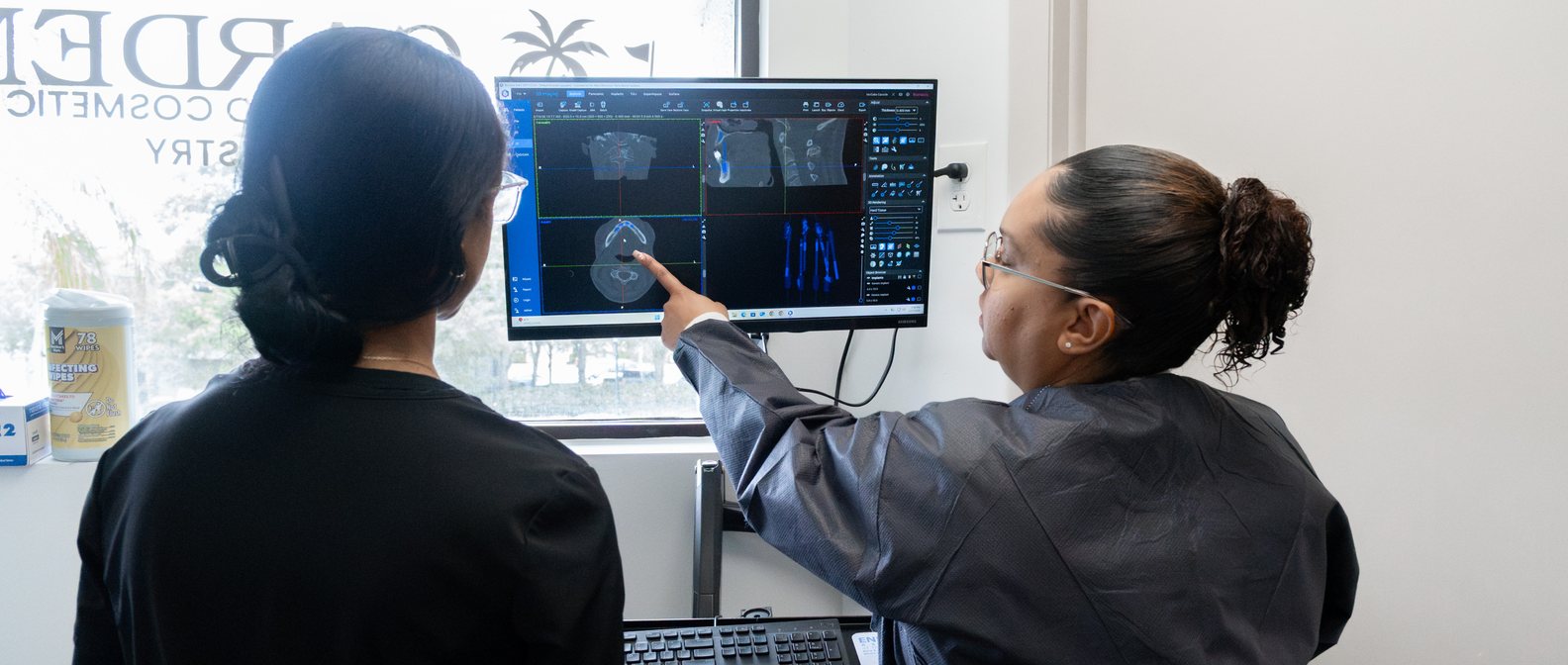
A clinical exam and imaging decide your timing. European consensus guidelines call diagnostic imaging an essential part of selecting patients and planning implant treatment. They add that radiation exposure must be justified and kept as low as reasonably achievable (Harris et al., EAO guidelines, 2012).
In practice, the planning visit usually covers:
Your medical history, medications and smoking or vaping use
The gums around the tooth and the neighboring teeth
X-rays, and when needed a 3D cone beam CT scan, to measure bone height and width
Where the sinus and nerves sit, and whether the socket walls are intact
What does the full timeline look like?
The full timeline is the wait before surgery plus the healing after it. After placement, the jawbone must fuse to the implant. Cleveland Clinic says this process, called osseointegration, can take anywhere from 3 to 9 months, depending on how quickly your body heals (Cleveland Clinic, 2026).
Path | Wait before the implant is placed |
ITI Types 1 to 4 (no graft first) | Same day, 4 to 8 weeks, 12 to 16 weeks, or more than 6 months |
Extraction with a bone graft first | Graft needs at least 3 months to heal; a large graft 9 to 12 months |
Upper back jaw with sinus augmentation | Bone typically develops for 4 to 12 months, sometimes same visit |
After any of these, add about 3 to 9 months of osseointegration before the final tooth. Your own timeline can differ from every row.
What should you ask at your consultation?
Ask what would change your answer. This decision list helps you understand exactly why your dentist recommends one timing over another, and what could move your plan earlier or later. Bring it to your visit and write down the answers:
Does infection around this tooth need treatment first?
Are the socket walls intact after removal?
Would a bone graft or socket preservation help me?
Is my sinus close enough to need extra bone?
Does my gum type make one timing safer for how the tooth looks?
How do smoking, vaping, diabetes or medications change my healing?
What temporary tooth or denture will I wear while I wait?
How we approach this at Gardens
At Gardens Implant & Cosmetic Dentistry in Palm Beach Gardens, Florida, timing starts with an exam, not a calendar. Dr. Hans Almanzar, DDS reviews your health history, checks the tooth and the gums around it, and looks at imaging to judge the bone and the socket walls.
He then explains which timing options fit your tooth, including tooth extractions with or without grafting, and what each means for your wait and your temporary tooth. If you are curious about the same-day route, read about same-day dental implants. If you are still deciding whether to save the tooth, read root canal or extraction and implant.
We tell patients when waiting is the safer choice, and when a same-day plan may be reasonable. The plan stays flexible, because healing can change it. Ask us which grafting materials and techniques we would use for your case.
When to call right away
Call us or seek urgent care right away if you notice any of these after an extraction. They can signal infection or dry socket, which is the loss of the blood clot from the socket, and they should not wait for your next visit:
Pain that gets worse after the first few days instead of easing
Bleeding that does not stop after firm pressure
Swelling of the face or jaw that is spreading
Fever, or a bad taste with pus
Trouble swallowing or breathing
Frequently asked questions
Can I get a dental implant the same day my tooth is pulled?
Sometimes. Same-day placement is called immediate placement. It depends on infection, the condition of the socket walls, whether the implant can be held firmly in the right position, and your gum health. Your dentist decides after an exam and a 3D scan.
How long should I wait after an extraction if I want to skip a bone graft?
There is no single number. The ITI timing types run from the same day to more than 6 months. Bone shrinks fastest in the first 3 to 6 months, so waiting without a plan can leave less bone. Ask whether your socket walls are intact.
Does socket preservation add time before an implant?
Usually yes. Cleveland Clinic says a dental bone graft needs at least 3 months to heal, and a large graft may need 9 to 12 months. A graft placed at the time of extraction aims to reduce the bone loss that would otherwise happen. Your plan sets the exact timing.
Will an infected tooth delay my implant?
It can. Infection is one of the factors dentists weigh when choosing timing. A 2026 review says waiting about 4 to 8 weeks gives a minor local infection time to resolve. Your dentist weighs the infection, the bone and your health, then decides whether to treat the infection first.
Does smoking change how long I should wait?
It can. MedlinePlus says smoking lowers the oxygen reaching a surgical wound, which can slow healing and raise infection risk. Most providers advise stopping tobacco at least 4 weeks before surgery. Tell us what you use, and we will plan the timing around it.
What scan decides when my implant can go in?
Imaging is an essential part of implant planning. Dentists commonly use X-rays and a 3D cone beam CT scan to measure bone height and width and to locate nerves and the sinus. The scan shows whether the socket walls are intact and whether a graft is needed.
Sources
Thoma DS, Mancini L, Jung RE, "Timing of Dental Implant Placement: The Past, the Present, the Future", Journal of Periodontal Research, 2026, https://pmc.ncbi.nlm.nih.gov/articles/PMC12982941/
Tonetti MS, Jung RE, Avila-Ortiz G, et al., "Management of the extraction socket and timing of implant placement: Consensus report and clinical recommendations of group 3 of the XV European Workshop in Periodontology", Journal of Clinical Periodontology, 2019, https://pubmed.ncbi.nlm.nih.gov/31215112/
Tan WL, Wong TL, Wong MC, Lang NP, "A systematic review of post-extractional alveolar hard and soft tissue dimensional changes in humans", Clinical Oral Implants Research, 2012, https://pubmed.ncbi.nlm.nih.gov/22211303/
Avila-Ortiz G, Chambrone L, Vignoletti F, "Effect of alveolar ridge preservation interventions following tooth extraction: A systematic review and meta-analysis", Journal of Clinical Periodontology, 2019, https://pubmed.ncbi.nlm.nih.gov/30623987/
Cleveland Clinic, "Dental Bone Graft" (2024) and "Dental Implants" (2026), https://my.clevelandclinic.org/health/treatments/21727-dental-bone-graft and https://my.clevelandclinic.org/health/treatments/10903-dental-implants
American Academy of Periodontology, "Sinus Augmentation", 2026, https://www.perio.org/for-patients/periodontal-treatments-and-procedures/dental-implant-procedures/sinus-augmentation/
MedlinePlus (National Library of Medicine), "Smoking and surgery", 2026, https://medlineplus.gov/ency/patientinstructions/000437.htm
Harris D, Horner K, Gröndahl K, et al., "E.A.O. guidelines for the use of diagnostic imaging in implant dentistry 2011", Clinical Oral Implants Research, 2012, https://pubmed.ncbi.nlm.nih.gov/22432473/

The right time for an implant is the time that fits your bone, gums and health. If you face an extraction, or lost a tooth a while ago, you can book a consultation with Gardens Implant & Cosmetic Dentistry and we will look at your options together.
This article is for education and does not replace an exam or advice from your dentist.
Blog