Are Full Mouth Dental Implants a Good Idea? An Honest Cost-Benefit Look
Are full mouth dental implants a good idea? For most patients, yes. Here's the honest math on cost, timeline, and outcomes vs. dentures, written without sales pressure.
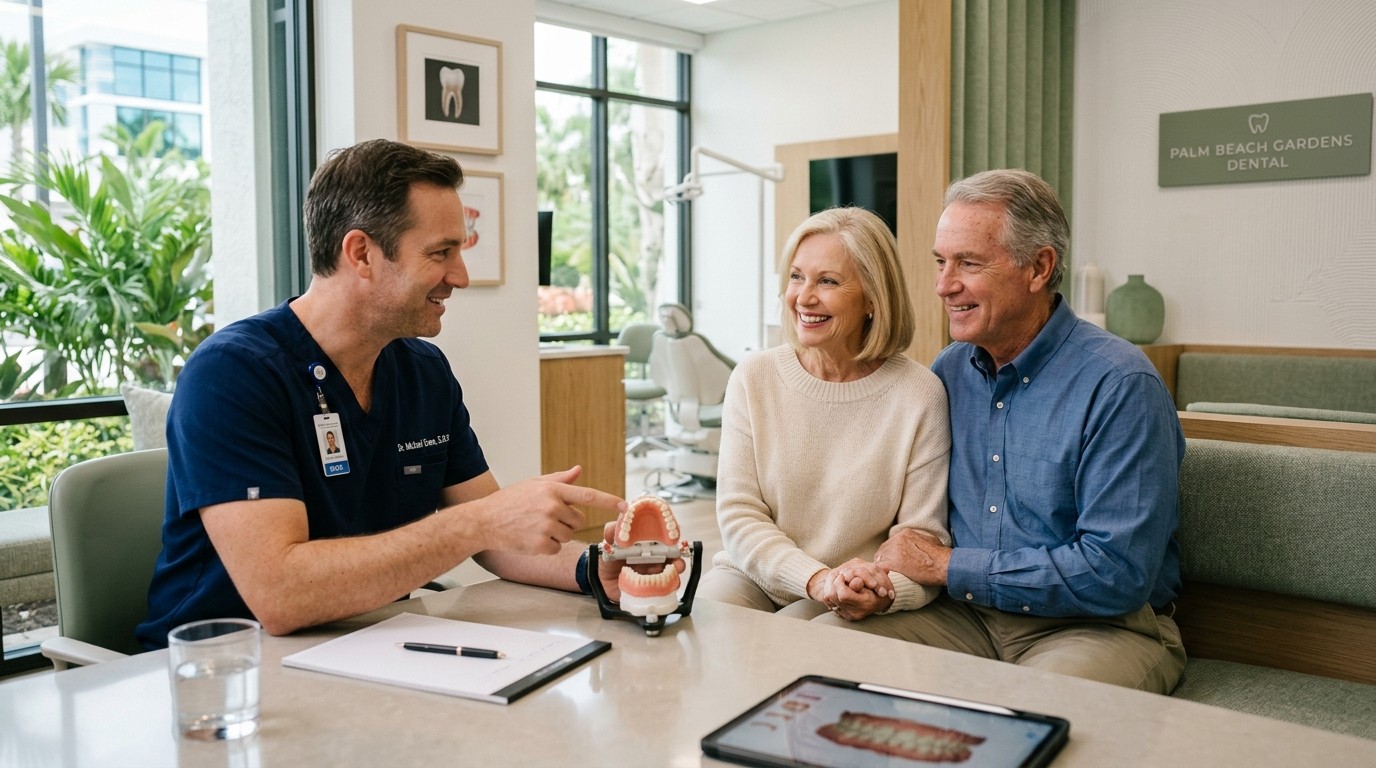
For Most Patients, Full Mouth Implants Are a Good Idea. The Math Is on Their Side.
Full mouth dental implants are a good idea for most patients who have lost or are losing all their teeth in one or both arches, with one important caveat: the right patient and the right candidate workup. Studies show implant users have a 95% success rate at restoring chewing function, and well-maintained implants can last 20+ years compared to 5 to 15 years for bridges and 5 to 8 years for dentures (Union Dental Implant Center). The honest argument against implants is mostly about cost and time, not outcomes. Below is the cost-benefit math without sales pressure.
When Full Mouth Implants Are Genuinely the Right Move
TLDR – Should You Get Full Mouth Implants?
Strong fit: Healthy adult, missing or losing most teeth in one or both arches, willing to commit to daily hygiene.
Cost range (US): $25,000 to $80,000 for full mouth, depending on technique and materials.
Lifespan: 20+ years with proper care; some implants last a lifetime.
Vs. dentures: Implants prevent jawbone loss; dentures accelerate it.
Recovery: 7 to 10 days of mild discomfort, full healing in 3 to 6 months.
Maintenance burden: Daily brushing, daily flossing or water flosser, professional cleanings every 3 to 6 months.
Long-term failure risk: Peri-implantitis affects roughly 20% of users within 5 to 10 years, mostly preventable with hygiene.
The strongest case for full mouth implants is bone preservation. When you lose teeth, the jawbone in that area no longer receives stimulation from chewing forces, so the body resorbs it. Within five years of losing teeth, the bone in the jaw can lose up to 50% of its volume, which is what causes the sunken facial appearance often seen with long-term denture wearers. Implants stimulate the bone the same way natural tooth roots do, which prevents the collapse. Dentures sit on top of the gum and accelerate bone loss because they apply pressure without providing the stimulation roots normally would.
The second strongest case is function. Patients with full mouth implants typically eat almost anything they want once healing is complete, including foods most denture wearers avoid (steak, raw vegetables, hard fruits, corn on the cob). Speech is normal because the prosthesis does not cover the palate the way an upper denture does. There is no adhesive, no overnight soaking, and no slipping during conversations. For patients who have spent years dealing with dentures, this is the single biggest quality-of-life upgrade.

When Full Mouth Implants Might Not Be Worth It for You
There are real situations where full mouth implants are not the smart choice. The first is cost. Even at the lower end of the U.S. range, $25,000 per arch is a significant investment, and not everyone can or should make that commitment. Implant-supported dentures placed on as few as four implants per arch (commonly called All-on-4) cost less than fixed full-arch bridges and still preserve bone, restore most function, and remove the slipping problem of conventional dentures. For patients on a budget, this middle option is often the right move. Traditional dentures remain the lowest-cost option and serve patients well when budget or medical factors rule out implants.
Medical Factors That Change the Math
Patients who smoke heavily, have uncontrolled diabetes (A1C above 8), are on intravenous bisphosphonate therapy, or have active head and neck cancer treatment face higher risk of early implant failure. In some of these cases, the right move is to fix the modifiable factors first (cessation, glycemic control, working with the oncologist on timing) and then place implants. In other cases, dentures or implant-supported dentures may genuinely be the better long-term choice. The disqualification is rarely permanent, but the timing matters.
The Maintenance Reality Most Articles Skip Over
Implants are not maintenance-free. They do not get cavities, but the gum and bone around them are still vulnerable to bacterial infection, and that infection (peri-implantitis) is the leading cause of late implant failure. Studies report peri-implantitis affecting roughly 20% of patients within 5 to 10 years (Union Dental Implant Center). The single biggest factor in whether you fall into that 20% is daily hygiene plus professional cleanings every three to six months for life. Patients who maintain this routine almost never lose implants late. Patients who skip cleanings for a year or two are the ones who walk in five years later with a failing implant. The cost-benefit math only works if you are willing to commit to the upkeep.

The Honest Verdict on Full Mouth Implants
For a healthy adult missing most or all teeth, willing to invest in the procedure and committed to daily hygiene, full mouth implants are almost always the right call long-term. They preserve bone, restore function, last decades, and remove the daily indignities of denture life. For patients with significant medical risk factors, tight budgets, or low maintenance compliance, implant-supported dentures or traditional dentures may be the smarter near-term choice with the option to upgrade later. There is no one-size-fits-all answer, and any practice that gives you one without examining your specific case is selling, not consulting.
Get a Real Cost-Benefit Conversation, Not a Sales Pitch
Wondering if full mouth implants are the right move for you? Get a real conversation, not a brochure. Our team at Gardens Implant & Cosmetic Dentistry, serving Palm Beach Gardens, Jupiter, and North Palm Beach, will review your medical history, take a 3D scan to evaluate bone, walk you through every option (full mouth implants, implant-supported dentures, traditional dentures), and give you the honest cost-benefit math for your specific situation. Schedule a comprehensive evaluation. Call (561) 691-1629 or book your free consultation.
Blog